


9 Best European Cities for Solo Travel in 2026
Discover the 9 best European cities for solo travel in 2026. Our guide covers safety, budget, and un…
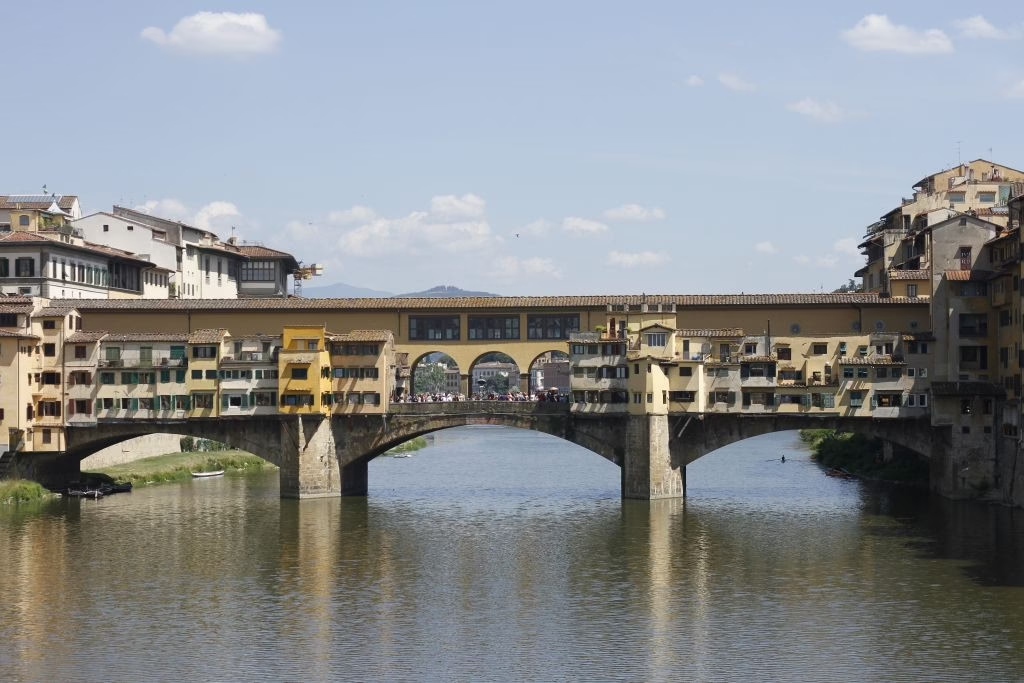
Nestled in the heart of Tuscany, Florence is the birthplace of the Renaissance, a movement that forever transformed art, architecture, and human thought. This enchanting city offers a seamless blend of cultural heritage and modern Italian charm, making it one of the most iconic and beloved travel destinations in the world.
Florence is one of the most concentrated art cities on earth, a place where you can walk in twenty minutes from Michelangelo’s David to Botticelli’s Birth of Venus to Brunelleschi’s dome. As a solo traveller, this density is an advantage. There’s no negotiating with a group about which museum to spend three hours in, no hurrying through rooms because someone else is bored, and no compromising on the long lunch at a specific trattoria you read about six months ago. Florence rewards the solo visitor who can move at their own pace and change plans without consultation.
The city is smaller than people expect: compact, walkable, and relatively manageable even on a first visit. It’s also more manageable for solo travellers than Rome in terms of crowds and logistics, though it has its own challenges around booking and costs.
ACTIVITIES
There are quite a few activities you can do in and around the city. Florence is filled with art, culture, and activities year around.
ATTRACTIONS
There are quite a few attraction you can visit in and around the city. Florence is filled with historical and cultural landmarks.
FOOD AND DRINKS
Classic Italian, including Bistecca alla Fiorentina, and wide variety of international cuisine are making Florence a foodie paradise, fit for everyone’s taste.
ACCOMMODATION
Hotels for every taste, guest houses and various accomodation options available.
Yes, with the caveat that Florence has become very expensive and requires advance booking more than almost any other Italian city. The combination of concentrated art tourism and a small city centre means accommodation costs are high, the Uffizi and Accademia sell out weeks ahead, and restaurants in the tourist circuit are uniformly overpriced. The answer to all three is the same: plan ahead, book early, and go slightly off the main circuit.
Solo travellers will find Florence’s pace comfortable. The city is walkable, the food is excellent, and the Florentines, unlike the Roman stereotype, tend to be reserved and direct rather than demonstratively warm, which is fine when travelling alone. The absence of a major party scene means the city attracts fewer groups and fewer of the attendant issues.
Oltrarno, on the south bank of the Arno, is the best base for solo travel in Florence. It’s the neighbourhood where Florentines actually live and eat, where the workshop culture (leather, restoration, ceramics) is still active, and where the density of tourists drops noticeably from the north bank. Piazza Santo Spirito is the social heart, a neighbourhood square with bars and restaurants around its perimeter, genuinely local in character, where sitting alone at a table in the evening is entirely unremarkable.
Santa Croce, on the north bank east of the centre, is less touristic than San Giovanni (the Duomo area) and has some of the city’s better independent restaurants and wine bars. The Mercato di Sant’Ambrogio is here, a working food market (not a tourist market) excellent for breakfast and lunch at low cost.
Avoid basing yourself in San Giovanni (the Duomo neighbourhood), it is the most touristy, most expensive, and most crowded part of the city, and there are better options ten minutes’ walk away.
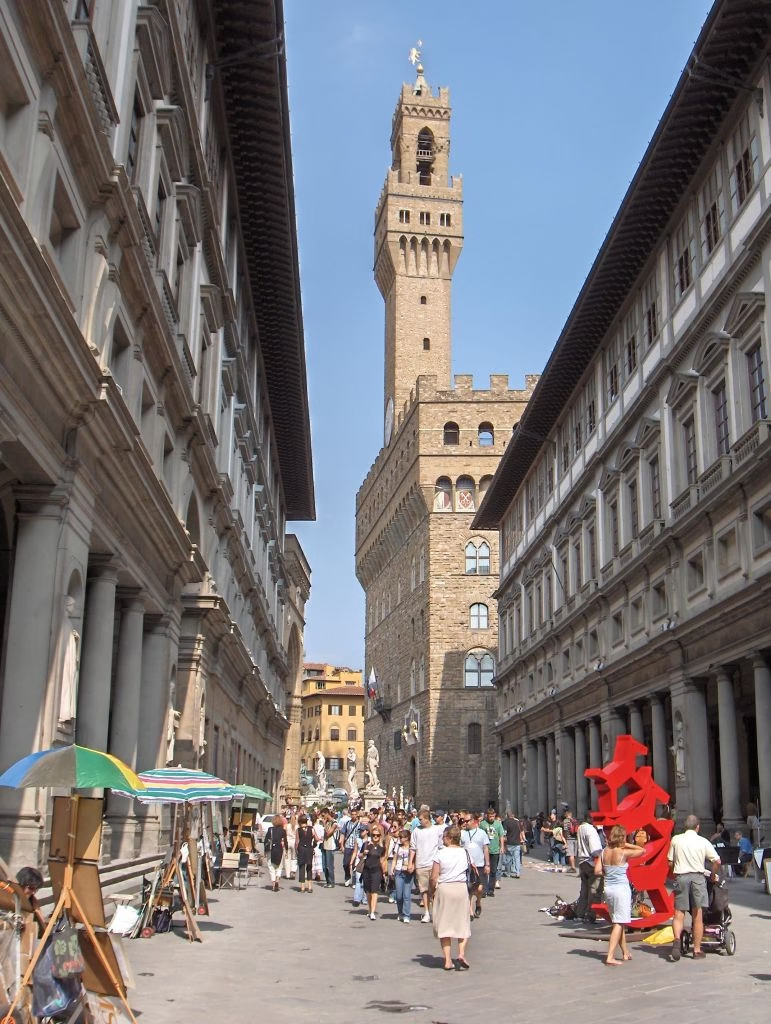
Florence is a very safe city for solo travellers by any reasonable measure. Pickpocketing is less aggressive than in Rome or Barcelona, though it exists around the major tourist sites (Piazza del Duomo, the Ponte Vecchio, the Uffizi queue). The standard urban habits, bag in front, phone not visible in crowds, are sufficient.
Solo female travellers will find Florence comfortable and the level of street harassment lower than Rome. The city is used to solo visitors, particularly younger travellers, and solo presence in restaurants, cafes and bars is normal.
Florence’s historic centre is almost entirely pedestrianised and the city is best navigated on foot. From Santa Croce to Oltrarno via the Ponte Vecchio is fifteen minutes. The Duomo to the Pitti Palace is twenty. Public transport is rarely necessary within the centre.
The main train station (Santa Maria Novella) is on the western edge of the historic centre and well connected to the rest of Italy, Rome in 1.5 hours by Frecciarossa, Bologna in 35 minutes. Florence makes an excellent base for day trips to Siena, Lucca, or Pisa.
Florence is one of the better Italian cities for solo dining. The Tuscan aperitivo culture, a drink with free snacks in the early evening, roughly 6-8pm, is a comfortable solo activity that requires no table commitment. Many bars in Oltrarno and Santa Croce do this well.
For sit-down meals, look for restaurants with a counter or bar seating option. The Mercato Centrale on Via dell’Ariento has a food hall upstairs (open for lunch and dinner) with shared seating that is entirely comfortable for solo visitors. Avoid the restaurants immediately surrounding the Ponte Vecchio and the Duomo, they are the most expensive and least good in the city.
Best time to visit: October and November are excellent: post-summer crowds, mild weather, the cultural season beginning. March and April are also good. July and August are intensely hot and crowded; avoid if possible.
Book major sights: the Uffizi, the Accademia (David), and the Duomo dome climb all require timed entry. Book online before you travel, same-day entry is rarely available for the Uffizi in any season.
Florentine food specifics: the local classics are bistecca alla Fiorentina (T-bone steak, sold by weight, minimum 300g, share this or don’t order it alone), ribollita (bread and vegetable soup), and lampredotto (offal sandwich from market stalls, worth trying). The house wine (vino della casa) in Florentine trattorias is often excellent and very cheap.
Written by Lily Evans, solo travel writer at gotravelyourself.com. Lily specialises in European slow travel and has travelled solo across Italy for 9 years.