


Common tourist traps in London
Traps can easily catch you unaware when exploring London, turning your exciting trip into a frustrat…

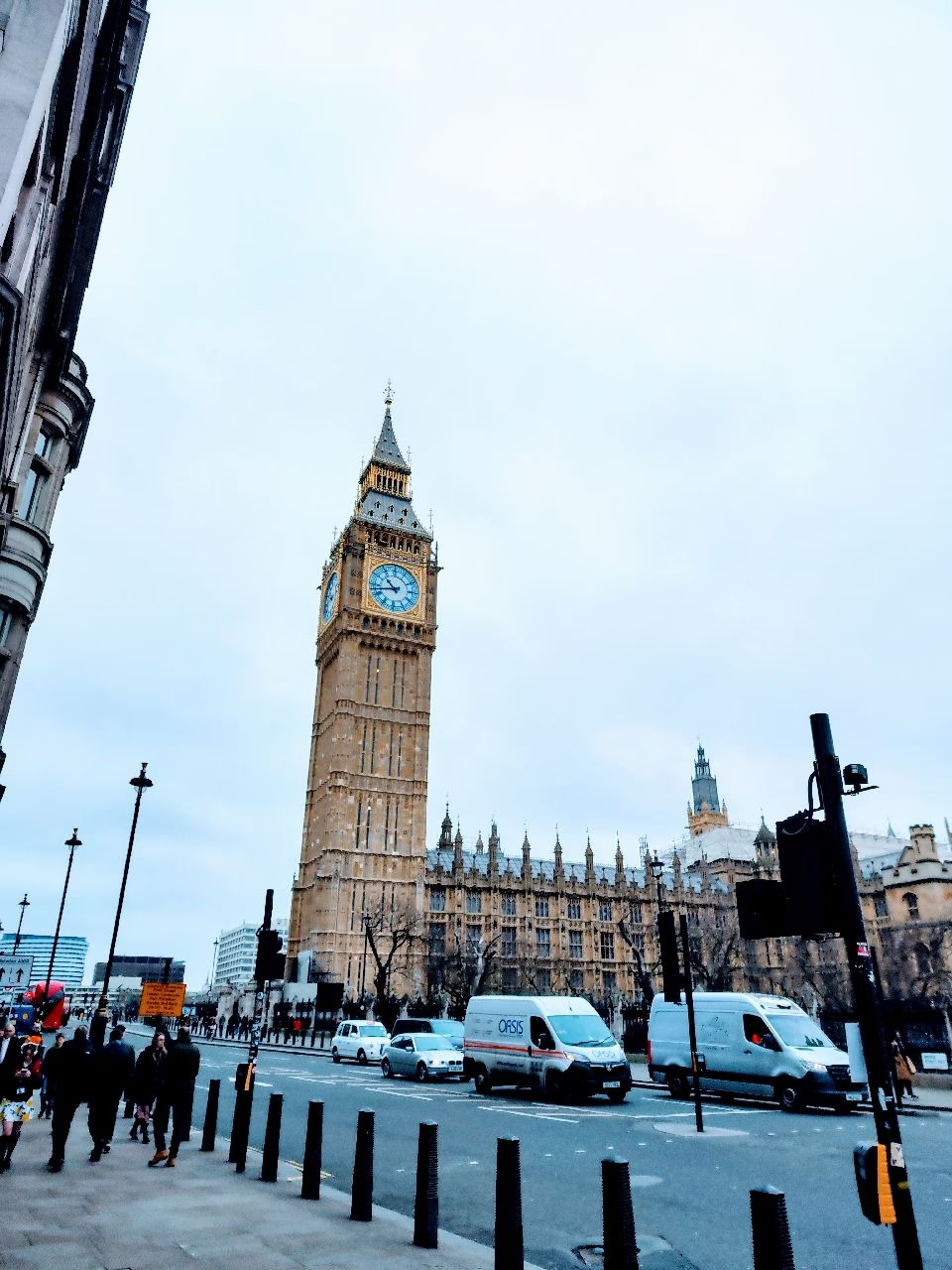
Whether you’re gazing at Big Ben, strolling along the River Thames, or exploring hidden gems in quirky neighborhoods, every corner of the city tells a story. With world-class museums, buzzing markets, historic landmarks, and a thriving food scene, London promises an unforgettable experience for every traveler. Ready to explore the British capital? Here’s everything you need to know before your trip!
London is one of the most straightforward major cities in the world to visit alone. The language barrier is zero, the public transport system covers virtually every corner of the city, the hostel and guesthouse scene is mature and well-developed, and the culture of eating, drinking and spending time alone in public is entirely unremarkable. For solo travellers who want to ease into independent travel, London is an excellent starting point. For experienced solo travellers, it remains one of Europe’s most rewarding cities.
What London lacks in the concentrated visual drama of Paris or Rome, it compensates for in variety, cultural depth and the sheer number of things that are free. Some of the world’s finest museums: the British Museum, the National Gallery, the Tate Modern, the Natural History Museum, charge nothing for entry. A solo trip to London on a tight budget is genuinely achievable in a way that few other capital cities match.
Exceptionally. It consistently ranks among the top cities globally for independent travel, and for good reason. The city is enormous, 33 boroughs, 14 million people in Greater London, but it functions as a series of connected villages, each with its own character. You can spend a week in London and feel like you’ve barely scratched the surface, which is simultaneously its most appealing and most overwhelming quality.
English is obviously no barrier, which removes one of the most common sources of solo travel anxiety. The Oyster card system makes transport simple and cheap. And London’s culture of quiet coexistence, people minding their own business on the Tube, reading in pubs, eating alone at restaurants without comment, is practically ideal for solo travellers who want to be surrounded by activity without being required to engage with it.
Shoreditch and Hoxton (East London) are the right base for a first solo trip. The area is compact, walkable, extremely well connected by Overground and Tube, and has an excellent range of accommodation, food and bar options at multiple price points. The neighbourhood’s creative and international character means solo presence never feels conspicuous, people arrive alone at bars and restaurants here without any social friction.
South Bank is worth prioritising for daytime solo exploration. The stretch from Westminster Bridge to Borough Market along the Thames South Bank is one of the great city walks: the Tate Modern, the Globe Theatre, Borough Market, and consistent river views, all on foot with no Tube required. It’s safe at any hour and exceptionally walkable.
Soho and Covent Garden are the traditional tourist centre and worth a day, but expensive and very busy in the evenings. Better for daytime exploration than as a base. Fitzrovia, just north of Soho, is quieter, has excellent independent restaurants, and is more comfortable for solo dining.
For solo female travellers specifically: London is broadly safe throughout, but exercise the usual urban awareness in and around the major nightlife areas (Old Street, Brixton) late at night. The city’s night bus network is reliable; black cabs are licensed and trustworthy as a late-night option.
ACTIVITIES
There are quite a few activities you can do in and around the city. London is filled with historical and cultural landmarks.
ATTRACTIONS
There are quite a few attraction you can visit in and around the city. London is filled with historical and cultural landmarks.
FOOD AND DRINKS
Classic British and wide variety of international cuisine are making London a foodie paradise, fit for everyone’s taste.
ACCOMMODATION
Hotels for every taste, guest houses and various accomodation options available.
London is a safe city by any international standard. Violent crime affecting tourists is rare. The practical concerns for solo travellers are the same as any large capital: pickpocketing in busy tourist areas (Oxford Street, the Tube at rush hour, around Leicester Square), and the occasional scam targeting obvious tourists.
The Tube at peak hours involves physical proximity to strangers that some travellers find uncomfortable; this is normal and not a safety concern. The night Tube (running 24 hours on Friday and Saturday on select lines) is a useful and generally safe option.
Get an Oyster card or set up contactless payment on your phone or bank card the moment you arrive, do not buy paper tickets. The Tube, Overground, Elizabeth Line, DLR and buses all accept contactless at the barrier or reader. Fares are capped daily, so you pay a maximum regardless of how many journeys you take.
Walking is consistently underestimated as a way to see London. The distances between central landmarks are shorter on foot than the Tube map suggests. The walk from Tower Bridge to St Paul’s Cathedral, from the British Museum to Covent Garden, from King’s Cross to Islington, these are 15 to 25 minutes and far more revealing than the equivalent Tube journey.
The black cab (Hackney Carriage) system is reliable and metered. Uber operates extensively. Both are appropriate for late nights. Avoid minicabs (private hire vehicles) flagged down on the street, always book through the app or a licensed firm.
London is one of the best cities in the world for solo dining. Counter seating is widespread across all price points, from Ramen shops and sushi bars to wine bars and mid-range restaurants. Borough Market (Thursday to Saturday) is excellent for solo grazing: multiple vendors, no table commitment required, excellent quality. The lunch counter at Quo Vadis in Soho, the bar dining at Barrafina, and the counter at Kiln in Soho are all specifically excellent for solo travellers.
The pub culture is the other significant advantage. London’s gastropub scene means that eating a proper meal alone at a bar, with a pint, reading a book or a newspaper, is entirely normal and socially unremarkable. It’s one of the most comfortable ways to eat alone in any major city.
Best time to visit: London in September and October is excellent: school holidays are over, the summer tourists have thinned, but the weather is still mild and the cultural calendar is full. May and June are also good. December is genuinely magical (Christmas markets, the South Bank Winter Festival) but very expensive.
Budget: London is expensive. The single most effective way to manage costs is to use the free museum days aggressively and self-cater at least one meal per day. Pret a Manger, Itsu, and the supermarket meal deal (sandwich, snack, drink for around £4) are legitimate options. Hostels in central London start from around £25-35 per night for a dorm bed.
Transport from Heathrow: the Elizabeth Line (Crossrail) connects Heathrow to central London in 27 minutes to Paddington. This is the correct option. Do not take a minicab from the arrivals hall at Heathrow.
Currency: cash is increasingly unnecessary in London, contactless card payment is accepted almost everywhere. Keep a small amount of cash for the rare cash-only establishment.
Written by Jennifer Ann Porter, solo travel writer at gotravelyourself.com. Jenny is UK-based and has travelled solo for 9 years across Europe, Southeast Asia and Central America.