


Unveiling Argentina’s Iconic Landmarks: The Ultimate Traveler’s Bucket List!
Argentina is a country that boasts a rich tapestry of natural wonders, vibrant cities, historical an…

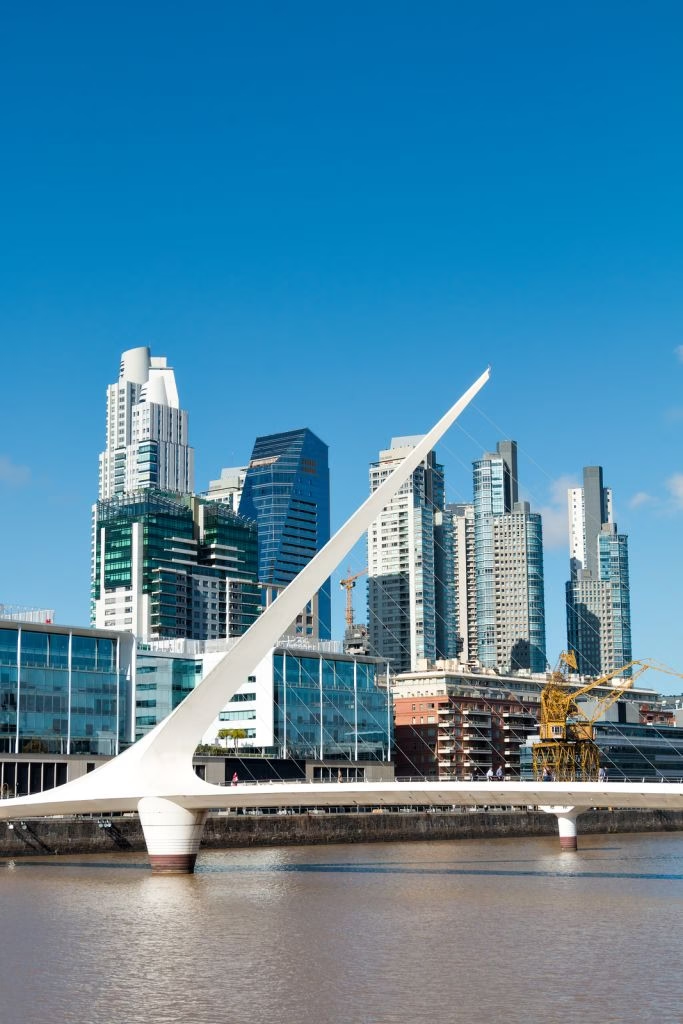
Buenos Aires, the vibrant capital of Argentina, is a city that captures the essence of South America with its lively culture, rich history, and intoxicating charm. Known as the “Paris of South America” for its grand European-style architecture, wide boulevards, and cosmopolitan flair, Buenos Aires is a city that effortlessly blends old-world elegance with modern energy.
Buenos Aires is one of the most compelling solo travel destinations in Latin America and one of the most complex. It is a city of extraordinary contrasts, European architecture over South American rhythms, world-class steak and wine at a fraction of European prices, a cultural scene (tango, theatre, literature) that punches far above the city’s tourist profile, and it rewards the visitor who arrives with curiosity rather than a checklist.
As someone who was born here and has spent years writing about this city, I can tell you that Buenos Aires is best understood as a series of distinct barrios, each with its own character, social rules and rhythms. The tourist version of Buenos Aires (La Boca, San Telmo tango shows, Puerto Madero steakhouses) is real but partial. The city that residents actually live in: the Palermo coffee shops at 11am, the Recoleta cemetery at sunset, the asado culture that builds social life around the grill, is more interesting and more accessible to independent visitors than most travel writing suggests
ACTIVITIES
There are quite a few activities you can do in and around the city. Buenos Aires is filled with historical and cultural landmarks.
ATTRACTIONS
There are quite a few attraction you can visit in and around the city. Buenos Aires is filled with historical and cultural landmarks.
FOOD AND DRINKS
Classic Argentinian food and wide variety of international cuisine are making Buenos Aires a foodie paradise, fit for everyone’s taste.
ACCOMMODATION
Hotels for every taste, guest houses and various accomodation options available.
Yes, with the caveat that it requires more safety awareness than European destinations and more advance understanding of the exchange rate situation. Buenos Aires has genuine security risks that need to be taken seriously, but they are specific and manageable, not pervasive. The city’s social culture is warm and welcoming to foreigners, English is widely spoken in tourist areas, and the sheer quality of food, wine and culture per dollar (or peso, at the right exchange rate) makes it one of the world’s great value travel destinations for anyone who does their research.
Palermo is the right base for most solo visitors. It divides into sub-neighbourhoods: Palermo Soho (independent shops, design cafes, restaurants), Palermo Hollywood (media offices, restaurant clusters) and Palermo Chico (elegant residential streets near the parks). All are walkable, safe, and have an excellent range of accommodation and food. The parks (Bosques de Palermo) are a legitimate leisure destination on weekends, when families and groups occupy them in the way that Paris occupies the Luxembourg Gardens.
San Telmo is the historic neighbourhood south of the centre, cobbled streets, antique shops, the Sunday flea market (Feria de San Pedro Telmo), and a tango culture that ranges from genuine local milongas to tourist shows. Worth extended time and safe during the day; the streets around the market are very crowded on Sundays, which increases petty theft risk.
Recoleta is the elegant, expensive neighbourhood of the French-inspired architecture, the famous cemetery (Cementerio de la Recoleta, extraordinary, worth two hours, completely free), and the highest accommodation prices in the city. Extremely safe, beautiful to walk, and somewhat lacking in the neighbourhood life that makes Buenos Aires interesting.
Avoid La Boca as a base, it is a tourist enclave (specifically the Caminito street) surrounded by a neighbourhood that is genuinely unsafe for tourists outside the immediate tourist area. Visit Caminito in the morning with your valuables secured, do not wander beyond the two-block tourist perimeter.e bars like Vico Wine Bar offer an excellent selection.
Buenos Aires requires specific safety habits that European destinations don’t. The practical concerns: express kidnapping (brief vehicle-based theft) exists but targets high-value displays (expensive watches, obvious cameras, flashy phones). Motorbike theft (thieves grabbing bags or phones from pedestrians) is the most common risk, concentrated in the microcentro (city centre) and parts of San Telmo.
Practical measures: use a bag that crosses your body, don’t walk with your phone visible, don’t display expensive jewellery. In ATMs use machines inside banks rather than street-facing ones. Uber is significantly safer than unlicensed taxis and should be your default transport option. The good news: the vast majority of solo visitors to Buenos Aires travel without incident. The habits above are what create that outcome.
Safety by barrio: Palermo, Recoleta, Belgrano and Puerto Madero are the safest areas. The microcentro requires more awareness during the day. La Boca: tourist circuit only. San Telmo: safe daytime, more care needed at night in side streets.
The SUBE card (rechargeable transit card) covers the Metro (Subte), buses and some trains. Buy one at any kiosk and load it with pesos. The Subte covers the main tourist areas and is fast and cheap. Buses cover the entire city but require some knowledge of routes for first-time visitors. Uber is available and safer than street taxis for getting between neighbourhoods, especially at night.
Buenos Aires is excellent for solo dining. The parrilla (grill restaurant) culture is the city’s defining food experience, you order a specific cut, it arrives with chimichurri and salad, you eat at your own pace. Solo at a parrilla counter is entirely normal. The informal delivery culture (deliveries here are fast and cheap) is also an option for nights when you don’t want to navigate.
For the full Buenos Aires solo dining experience: a glass of Malbec and an entraña (skirt steak) at a neighbourhood parrilla in Palermo, eaten at the bar or a single table. A medialunas (croissants) and café con leche at a corner bar in the morning. Empanadas from a hole-in-the-wall bakery at any hour.
Best time to visit: March-May and September-November. Buenos Aires summers (December-February) are humid and very hot. July and August are cool but dry — good for culture and indoor activities.
The exchange rate: Argentina’s currency situation is complex. The official exchange rate and the unofficial (blue dollar) rate differ significantly. Using a debit card that gives you the official rate means paying substantially more than travellers accessing the blue dollar rate through legitimate financial apps (Wise, Western Union, local cambio houses). Research the current situation before you travel, it changes frequently. My current guidance is updated at allaboutbuenosaires.com.
Language: Spanish is essential for anything beyond the tourist circuit. Learning basic Spanish before you arrive makes an enormous difference to the quality of interaction. Argentinian Spanish has a distinctive accent and uses vos instead of tú — both charming and initially confusing.
Written by Natalia Romero, Argentine travel writer at allaboutbuenosaires.com and gotravelyourself.com. Natalia was born and raised in Buenos Aires.