


Best Swiss Cities for Solo Female Travelers in 2025
Discover the best Swiss cities for solo female travelers in 2025—safe, scenic, and perfect for solo …
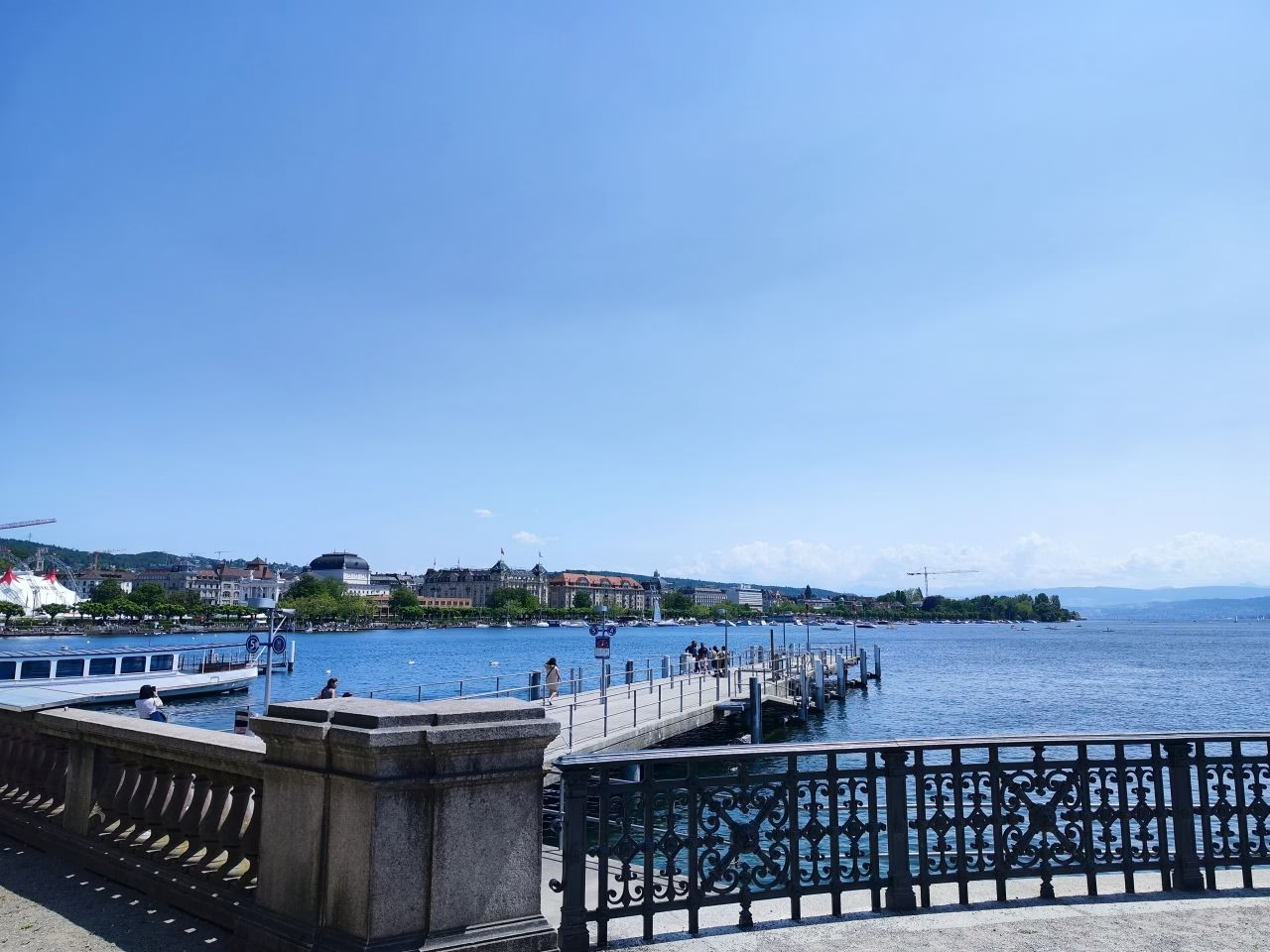
Nestled along the banks of the Limmat River and Lake Zurich, this cosmopolitan hub is famous for its world-class museums, luxury shopping, and thriving culinary scene. Whether you’re a history buff, an outdoor enthusiast, or a foodie, Zurich has something for everyone.
I’ve been based in Zürich for nine years, and I still find things in this city that surprise me. Zürich has a reputation, expensive, banking-focused, efficient to the point of sterility, that puts people off, and the reputation isn’t entirely wrong. It is expensive, probably more so than you expect even if you’ve been warned. But it is also genuinely beautiful, exceptionally safe, full of cultural life that most visitors miss entirely, and one of the most comfortable cities in the world to be alone in.
The solo travel case for Zürich: it is the kind of city where sitting in a café for two hours is legitimate and unremarked, where walking alone along the lake at any hour is completely safe, and where the infrastructure, transport, signage, services, works so reliably that the cognitive load of solo navigation is lower than almost anywhere else in Europe.
ACTIVITIES
There are quite a few activities you can do in and around the city. Zurich is filled with activities and things to do.
ATTRACTIONS
There are quite a few attraction you can visit in and around the city. Zurich is filled with historical and cultural landmarks.
FOOD AND DRINKS
Classic Swiss and international cuisine and obligatory cheese fondue, they are all on the menu.
ACCOMMODATION
Hotels for every taste, guest houses and various accomodation options available.
For experienced solo travellers who know how to manage costs and don’t need a constant social scene, yes. For first-time solo travellers on a tight budget, it is challenging. The city’s expense is real, a coffee is CHF 5-6, a restaurant main course is CHF 25-40, hostel dorm beds are CHF 40-60. Understanding how to eat cheaply (Migros or Coop supermarket lunch, the university Mensa, the market stalls) significantly changes the experience.
Zürich rewards slow travel. The city reveals itself over days, not hours, the gallery system in Langstrasse, the lakeside paths that stretch to the vineyards, the neighbourhood Beizen (local pubs) that don’t appear in any guide. Visitors who come for one day and tick the Grossmünster and the lake walk get a fraction of what’s here.
Langstrasse (the 4th and 5th districts) is where Zürich stops being corporate and starts being interesting. It is the city’s most diverse neighbourhood: Turkish grocers, Vietnamese restaurants, independent bars, the best coffee shops in the city, and a gallery scene that is genuinely active. The prostitution area on Langstrasse itself is visible and legal in Switzerland, it exists, it is regulated, and it is not a safety concern for anyone walking through during the day or early evening. Worth knowing about rather than being surprised by.
Zürich-West (Kreis 5), adjacent to Langstrasse, is the former industrial area that now contains the Schiffbau (theatre and jazz club in a converted shipbuilding hall), the Viadukt (shops and restaurants under the railway arches), and the best concentration of contemporary architecture in the city. Very comfortable for solo walking.
The old town (Niederdorf on the right bank of the Limmat) is charming and worth time, particularly the cobbled streets around the Grossmünster and the Lindenhügel hill. More tourist-oriented than the western districts but not unpleasantly so.
Zürich is one of the safest cities in the world. Violent crime is essentially absent from the visitor experience. Solo female travellers will find it entirely comfortable at all hours. The Swiss culture of minding your own business is a feature rather than a bug, you will not be bothered.
The main exception is Platzspitz Park (near the main station), which historically had a severe drug problem and still has an open drug scene though far less extreme than in the 1980s. It is not dangerous to walk through during the day but is not a comfortable evening option.
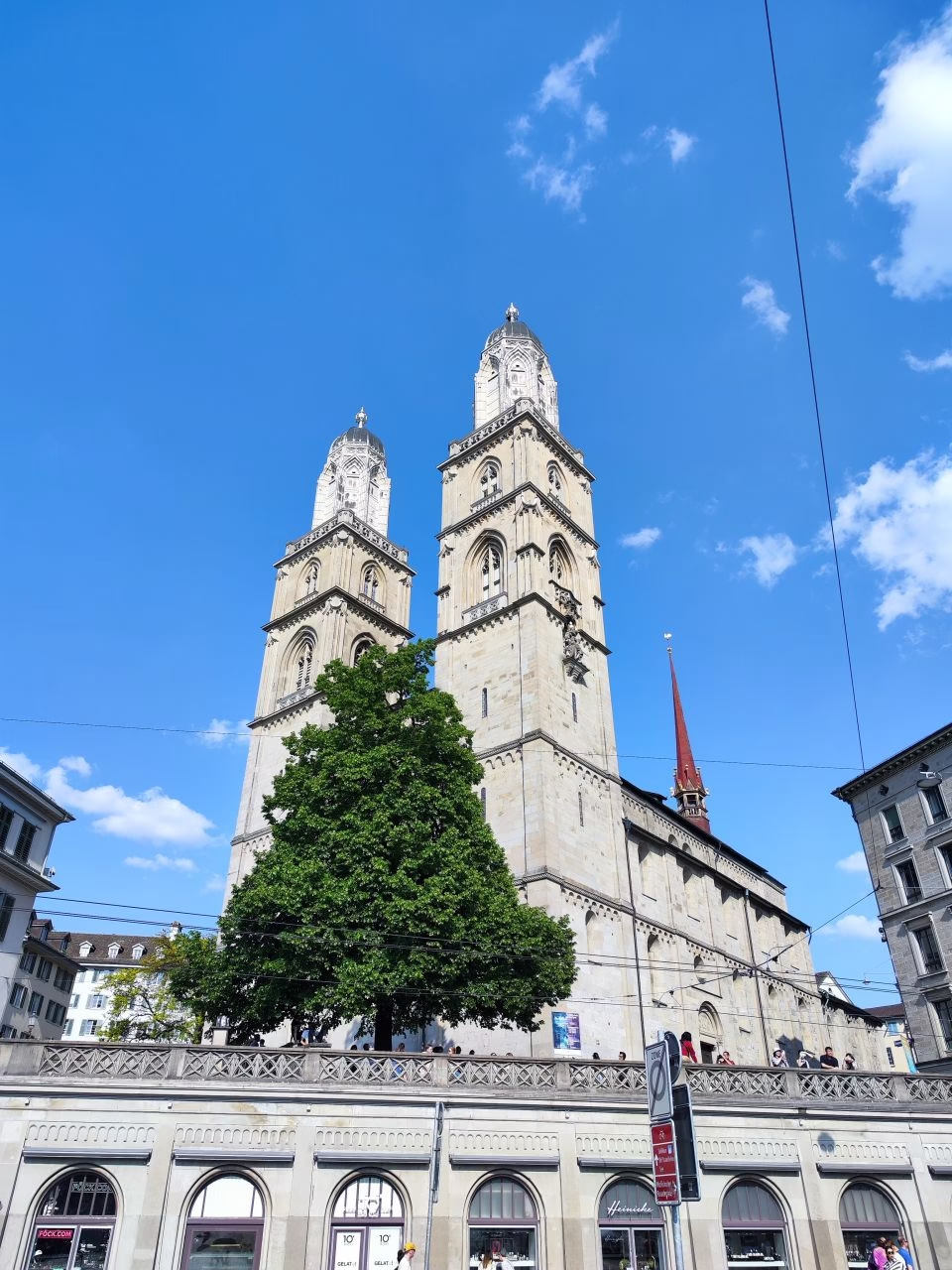
Zürich’s tram network is one of Europe’s finest. The 10 and 14 trams are the most useful for tourists. The Zürichcard (24 or 72 hours, available at the airport) covers all trams, buses, S-Bahn, and boats on the lake, it is excellent value for visitors spending more than a day. The city is also very walkable, the distance from Hauptbahnhof to the old town is ten minutes; from the old town to Langstrasse is fifteen.
Swiss café culture is genuinely solo-friendly. The traditional Kaffeehäuser (coffee houses, particularly in the old town) are places where sitting alone for an extended period is normal and unremarked. For meals, the Viadukt restaurants in Zürich-West have a range of options and a relaxed atmosphere. The university Mensa on Rämistrasse is open to non-students and serves three-course lunches for around CHF 12, by far the best budget lunch in the city.
For the quintessential Zürich experience: a Zürich Geschnetzeltes (thin-sliced veal in cream sauce with Rösti) at a traditional restaurant in the old town or a Beiz in Langstrasse. The local Feldschlösschen or Hürlimann beer on draught, a raclette in winter, a glass of Swiss Pinot Noir from the local vineyards.
Best time to visit: June, July and August for the lake (swimming in the lake from the public Badis is a Zürich institution, the Oberer Letten and Frauenbad are excellent). September and October for mild weather and the cultural season. December for the Christmas market on Werdmühleplatz and the Sechseläutenplatz.
Budget management: the Migros and Coop supermarkets have excellent prepared food sections for lunch. The Zurich Card pays for itself quickly if you’re using public transport daily. Museum night (Lange Nacht der Museen, October) offers late-night access to 50+ museums for a single ticket.
Day trips: the lake towns (Rapperswil, 40 minutes by S-Bahn), Lucerne (45 minutes), the Rhine Falls at Schaffhausen (40 minutes). All are included on the Zürichcard zones or require a short additional fare.
Written by Laura Meier, Zürich-based travel writer at allaboutswiss.com and gotravelyourself.com. Laura has lived in Zürich for 9 years.