
Last Updated on
Lace Up Your Boots: Europe’s Finest Trails Await
Discover the best hiking trails Europe has to offer with this curated list perfect for solo adventurers, budget travelers, and outdoor enthusiasts. From challenging climbs to scenic rambles, find the ideal trail for your skill level and explore breathtaking landscapes. This list covers iconic routes like the Tour du Mont Blanc and Camino de Santiago, plus hidden gems like the Slovenian Mountain Trail and Laugavegur Trail. Plan your next European hiking adventure now!
1. Tour du Mont Blanc
The Tour du Mont Blanc (TMB) earns its spot at the top of the best hiking trails in Europe list for its stunning Alpine scenery, challenging yet rewarding trek, and rich cultural immersion. Circumnavigating the majestic Mont Blanc massif, the TMB takes you through a breathtaking journey across France, Italy, and Switzerland, offering unparalleled views of glaciers, lush meadows, and of course, Western Europe’s highest peak. This 170-kilometer (105-mile) circular route is a classic among avid hikers, offering a unique blend of natural beauty and charming alpine villages.
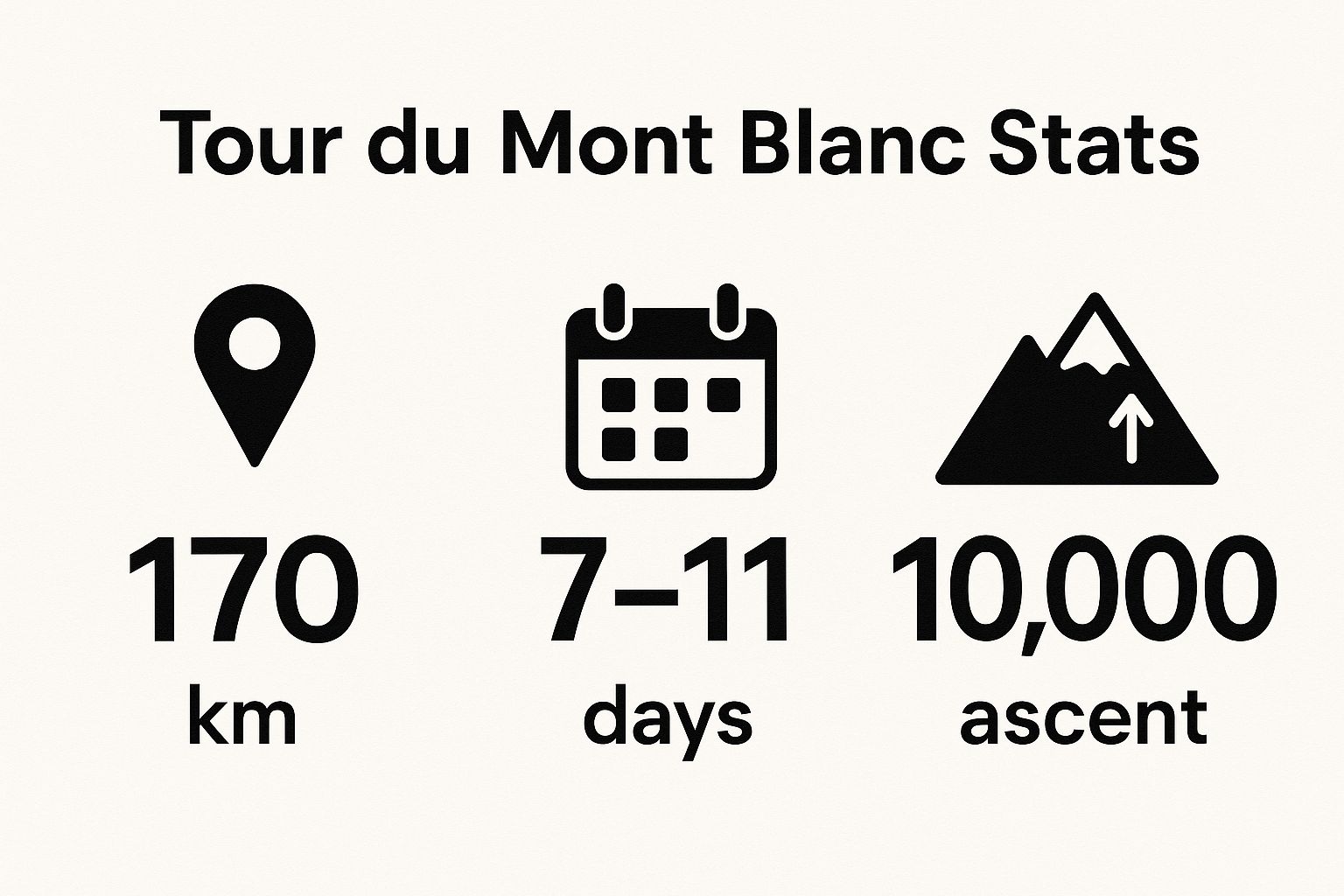
The infographic visually represents key statistics about the TMB: its 170km distance translating to roughly 10-11 days of hiking, the impressive 10,000m total elevation gain representing a significant challenge, and the loop traversing three countries highlighting the cultural diversity of the experience. These numbers emphasize the scale of the adventure and the commitment required, but also the incredible reward awaiting those who undertake this journey. The 170km distance broken down over 10-11 days creates manageable daily stages, and while 10,000m of ascent sounds daunting, it’s spread out throughout the trek. The three-country aspect underscores the unique cultural immersion offered by the TMB, appealing to history and culture enthusiasts.
The TMB is typically completed in 7-11 days, involving an elevation gain of approximately 10,000 meters. This might sound intimidating, but the well-marked trails and excellent infrastructure, including a range of accommodation from rustic mountain huts (refuges) to comfortable hotels, make it achievable for reasonably fit hikers with moderate experience.
The route passes through charming Alpine villages like Chamonix (France), Courmayeur (Italy), and Champex (Switzerland), offering opportunities to experience local culture and cuisine. For budget-conscious travelers, the refuges offer a more affordable alternative to hotels, enhancing the immersive experience. Solo travelers, particularly female hikers, can find a sense of community and safety in the shared experience of the refuges.
Pros:
- Well-marked trail with excellent infrastructure
- Accommodation options ranging from mountain huts to hotels
- Exceptional diversity of landscapes and cultural experiences
- Accessible for reasonably fit hikers with moderate experience
- Can be hiked in sections if time is limited, making it adaptable to different schedules.
Cons:
- Crowded during peak season (July-August)
- Weather can be unpredictable, even in summer
- Relatively expensive compared to other European hikes
- Requires advance booking for accommodations, especially refuges, in high season
Examples:
- The classic counterclockwise route starting in Les Houches, France.
- The ‘fast and light’ version completed by ultra-trail runners in approximately 20 hours during the Ultra-Trail du Mont Blanc (UTMB) race, a testament to the route’s versatility and appeal to adventure seekers.
Tips:

- Book refuges 6-12 months in advance, especially if hiking during the peak summer season.
- The optimal hiking season is late June to mid-September for the best weather conditions.
- Consider a clockwise direction to potentially avoid some of the crowds during peak season.
- Pack for all weather conditions, including rain and possibly snow, as mountain weather can change rapidly.
- The Refugio Bonatti in Italy is renowned for offering excellent accommodation and food, a welcome treat during the trek.
Popularized By:
- The Ultra-Trail du Mont Blanc (UTMB) race has significantly increased the TMB’s visibility among international hikers and adventure enthusiasts.
- Kilian Jornet, a renowned ultra-trail runner who holds speed records on Mont Blanc, has further cemented the TMB’s reputation as a challenging and rewarding route.
- Features in publications like National Geographic’s “World’s Best Hikes” have contributed to the TMB’s global recognition.
The Tour du Mont Blanc truly offers something for everyone: a challenging yet achievable hike, stunning natural beauty, cultural immersion, and a sense of accomplishment that few other European trails can match. Whether you’re an experienced hiker or a relative newcomer, the TMB promises an unforgettable adventure.
2. Camino de Santiago (French Way)
The Camino de Santiago’s French Way (Camino Francés) earns its place among the best hiking trails in Europe not just for its physical beauty, but for its unique blend of history, culture, and spiritual significance. This iconic pilgrimage route leads to the shrine of the apostle Saint James the Great in the cathedral of Santiago de Compostela in northwestern Spain. Stretching approximately 780 kilometers (485 miles) from Saint-Jean-Pied-de-Port in France, it traverses stunning landscapes across northern Spain, offering a journey rich in both personal reflection and cultural immersion.
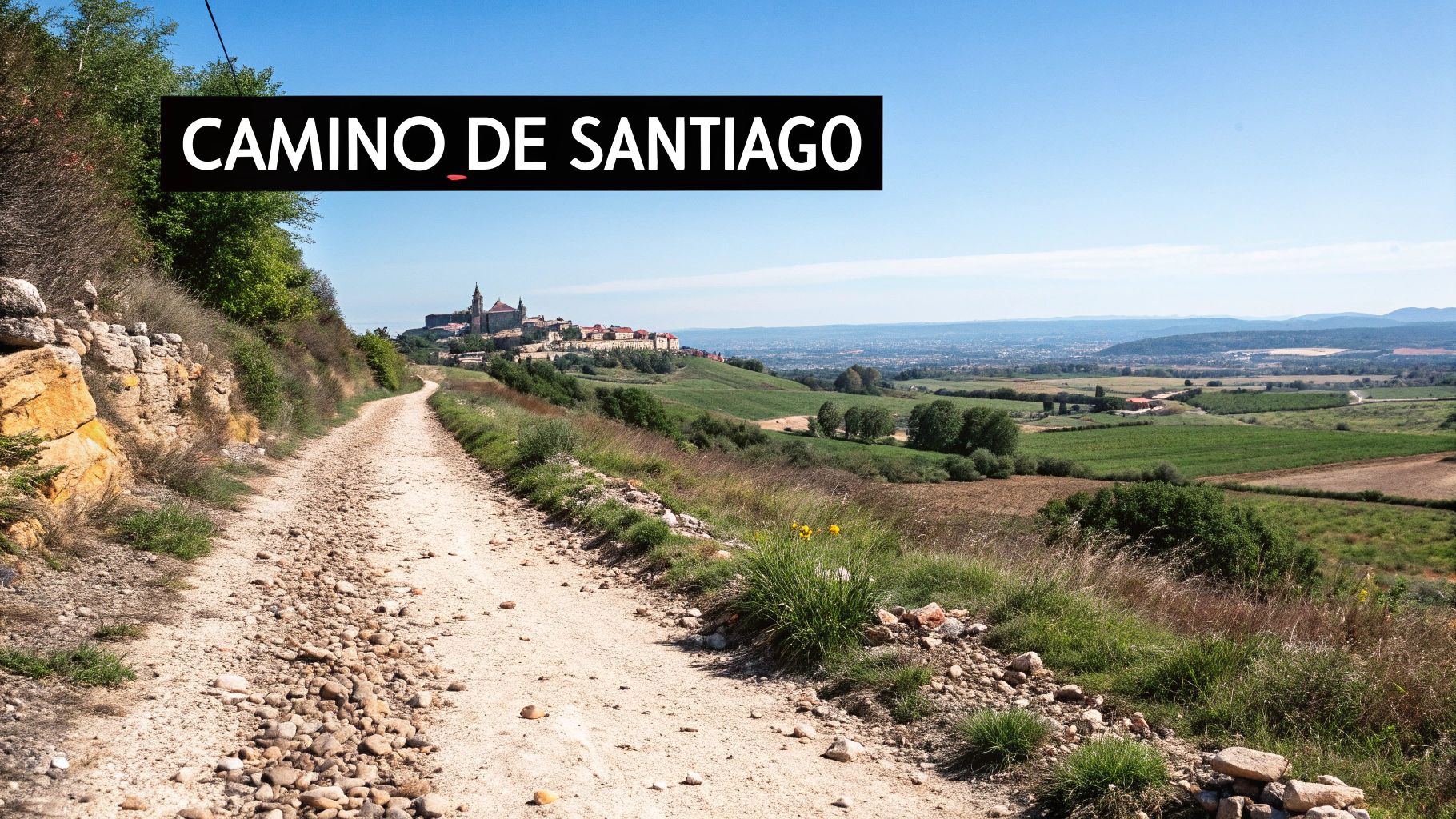
Walking the Camino de Santiago is more than just hiking; it’s a deeply personal experience. While many are drawn by religious devotion, others seek a challenge, a connection with nature, or a chance to disconnect from modern life and connect with fellow travelers.
The route is remarkably well-marked with the iconic yellow arrows and scallop shell symbols, making navigation straightforward even for solo travelers. A well-developed pilgrim infrastructure ensures access to affordable accommodation in albergues (hostels) every 5-10 kilometers. This makes it a particularly attractive option for budget-conscious explorers and solo female travelers seeking a safe and supportive community.
Features:
- 780 km route through northern Spain
- Typically takes 30-35 days to complete
- Passes through major cities including Pamplona, Burgos, León, and Santiago
- UNESCO World Heritage status
- Well-developed pilgrim infrastructure with albergues (hostels) every 5-10 km
Pros:
- Excellent waymarking
- Social experience with diverse pilgrims
- Affordable accommodation
- Cultural immersion in Spanish history and traditions
- Can be walked in sections, ideal for those with limited time
Cons:
- Crowded during peak season (May-September)
- Limited solitude
- Some sections along roads
- Summer heat can be challenging, especially on the Meseta plateau
- Initial stages crossing the Pyrenees are physically demanding
 For those seeking a shorter, but equally rewarding experience, the section from Sarria to Santiago (the last 100km) is a popular choice, as completing this distance qualifies pilgrims for the official Compostela certificate. Whether you’re drawn to the spiritual significance, the physical challenge, or simply the opportunity to experience northern Spain’s beauty and culture, the Camino de Santiago offers a truly unique adventure. For independent solo travelers, especially women, the established route and supportive community provide both freedom and security. Culture and history enthusiasts will be captivated by the ancient towns and traditions encountered along the way. Learn more about Camino de Santiago (French Way)
Tips for your Camino:
- Obtain a pilgrim passport (credencial) to access pilgrim hostels and receive the Compostela certificate.
- Spring (April-June) and autumn (September-October) offer the best walking conditions, avoiding both extreme heat and winter cold.
- Break in your hiking boots thoroughly before starting to prevent blisters and discomfort.
- Pack light — aim for a backpack under 10% of your body weight to enhance your walking experience.
- Budget approximately €30-40 per day for food and accommodation, making it an accessible option for budget travelers.
The Camino’s enduring popularity has been further fueled by Paulo Coelho’s book The Pilgrimage, Martin Sheen’s film The Way, and celebrity pilgrims like Shirley MacLaine who have shared their transformative journeys. It remains a powerful testament to the enduring human desire for connection, self-discovery, and adventure.
3. Haute Route: Conquer the Alps’ Most Spectacular Hiking Trail
The Haute Route deserves its place among the best hiking trails in Europe, if not the world, for its breathtaking alpine scenery and challenging yet rewarding journey. This isn’t just a hike; it’s an immersion into the heart of the Alps, traversing beneath iconic peaks like Mont Blanc and the Matterhorn. Connecting Chamonix, France, to Zermatt, Switzerland, the Walker’s Haute Route offers a unique blend of high-alpine wilderness, charming Swiss villages, and physical accomplishment. While other trails might offer easier introductions to the Alps, the Haute Route provides a true sense of adventure and connection with nature for experienced hikers.
This spectacular 180-kilometer (112-mile) trek typically takes 12-14 days to complete, crossing eleven high mountain passes and accumulating approximately 12,000 meters of elevation gain. The route winds through remote alpine terrain, passing glistening glaciers, vibrant wildflower meadows, and traditional villages offering glimpses into Swiss culture. The culmination of the journey, with stunning views of the Matterhorn, is an unforgettable reward for the demanding trek.
Features and Benefits:
- 180 km point-to-point route: A classic trek between Chamonix and Zermatt, offering a linear journey through diverse alpine landscapes.
- Duration: Plan for 12-14 days to fully appreciate the scenery and manage the physical demands.
- Elevation Gain: The significant elevation gain provides a challenging but rewarding experience for experienced hikers.
- Accommodation: An excellent system of mountain huts offers comfortable overnight stays along the route.
- Cultural Immersion: The route passes through picturesque Swiss villages, providing opportunities to experience local culture and hospitality.
Pros:
- Unparalleled Scenery: Arguably the most spectacular mountain scenery in Europe, including views of Mont Blanc and the Matterhorn.
- Less Crowded: Compared to popular trails like the Tour du Mont Blanc, the Haute Route offers a more secluded experience.
- Excellent Hut System: Comfortable mountain huts provide convenient accommodation and meals along the route.
- Varied Terrain: A mix of high-alpine wilderness and charming villages provides a diverse and engaging trekking experience.
- Iconic Finish: The trek culminates with breathtaking views of the iconic Matterhorn.
Cons:
- Technically Demanding: Requires a good level of fitness and some basic mountaineering skills. Certain sections may require rope work and glacier travel experience.
- Physical Challenge: The steep ascents and descents, combined with high altitude, make this a physically demanding trek.
- Short Hiking Season: Limited to mid-July to mid-September due to snow conditions.
- Rapid Weather Changes: Mountain weather can change quickly, presenting potential hazards.
- Higher Cost: More expensive than many other European treks due to the mountain hut system and logistical considerations.
Examples and Route Options:
- Classic 14-day itinerary: Utilizing the established network of mountain huts.
- Europaweg Variation: Incorporating the Europaweg and the Charles Kuonen Suspension Bridge (the world’s longest pedestrian suspension bridge) for a thrilling alternative.
Tips for Hiking the Haute Route:

- Book Huts in Advance: Reservations are essential, particularly during peak season (July and August).
- Be Prepared for Snow: Even in August, snow crossings are possible. Carry appropriate gear and be prepared for changing conditions.
- Essential Gear: Crampons and an ice axe are recommended, especially for early-season hikes or if snow is anticipated.
- Consider a Guide: For less experienced hikers or for tackling more technical sections, hiring a certified mountain guide can enhance safety and enjoyment.
- Contingency Days: Build in extra days to accommodate potential delays due to bad weather.
- Train Extensively: Prepare for the challenging terrain by focusing on building endurance and strength for steep ascents and descents.
Resources and Further Information:
- Kev Reynolds’ “Chamonix to Zermatt: The Walker’s Haute Route”: A comprehensive guidebook providing detailed route information and practical advice.
- Lonely Planet’s “Epic Hikes of the World”: Features the Haute Route among its selection of incredible trekking experiences.
The Haute Route isn’t just one of the best hiking trails in Europe; it’s a bucket-list adventure for those seeking a challenging and rewarding experience in the heart of the Alps. While demanding, the stunning scenery and sense of accomplishment make it an unforgettable journey for seasoned trekkers seeking true alpine immersion.
4. GR20 (Corsica)
Among the best hiking trails Europe has to offer, the GR20 in Corsica stands out for its raw beauty and unparalleled challenge. This isn’t a leisurely stroll; the GR20 (Grande Randonnée 20) is widely considered the toughest long-distance trail on the continent. Traversing the mountainous spine of Corsica from north to south, this formidable 180-kilometer (112-mile) route presents a true wilderness adventure, attracting experienced hikers seeking breathtaking landscapes of jagged peaks, crystal-clear mountain lakes, and dramatic gorges. If you’re looking for a demanding yet rewarding trek that truly tests your limits amidst stunning Mediterranean scenery, the GR20 deserves a spot on your European hiking bucket list.
The GR20 takes you through Corsica’s rugged interior, a remote landscape combining alpine and Mediterranean environments. This 15-16 day journey features extreme elevation changes and rocky, technical terrain, requiring not just stamina but also solid hiking and some scrambling skills. Basic mountain refuges, spaced a day’s hike apart, provide shelter, offering a unique experience of simple mountain living.
Features:
- 180 km (112 miles) route through Corsica’s mountainous interior
- Typically takes 15-16 days to complete
- Extreme elevation changes with rocky, technical terrain
- Remote Mediterranean mountain landscape
- Basic mountain refuges providing basic accommodation
Pros:
- Unparalleled rugged beauty and a true wilderness experience
- Less crowded than many other famous European trails
- Unique Corsican culture and cuisine encountered in villages along the route
- Immense sense of achievement upon completing Europe’s toughest trek
- A truly adventurous and challenging experience for seasoned hikers
Cons:
- Very physically demanding with steep ascents and descents
- Requires excellent fitness, prior hiking experience, and some scrambling skills
- Basic accommodation in mountain refuges
- Limited resupply points require careful planning
- Afternoon thunderstorms common in the summer months
- Some exposed sections that are dangerous in bad weather
Examples of GR20 Experiences:
- The traditional north-to-south route starting in Calenzana and ending in Conca
- The challenging Cirque de la Solitude section (now bypassed after a fatal accident) offers an alternate, safer route
- Alpine variant routes exist for particularly difficult sections, appealing to experienced mountaineers.
Tips for Hiking the GR20:

- Train specifically for steep downhill sections, which are a major cause of injuries.
- Pack as light as possible while bringing all essential safety gear.
- June and September offer the best conditions with fewer crowds and more moderate weather.
- Book refuges well in advance, especially during peak season.
- If time is limited, consider tackling just the northern or southern half.
- Bring cash, as credit cards aren’t accepted at all refuges.
The GR20 has been popularized by hiking guides like Paddy Dillon’s “GR20: Corsica: The High Level Route” and features in various publications as the “toughest trek in Europe”. Even ultra-runner François D’Haene, who set the fastest known time of 31 hours in 2016, has attested to its difficulty. This trail is a serious undertaking, but the rewards are immense. For independent adventurers, particularly those seeking physical challenges and stunning natural beauty, the GR20 offers a truly unique and unforgettable experience. Learn more about GR20 (Corsica) It’s a challenging but rewarding option for those seeking the best hiking trails Europe can offer.
5. Kungsleden (The King’s Trail)
For those seeking an unforgettable Arctic adventure, Kungsleden (The King’s Trail) earns its place among the best hiking trails Europe has to offer. This iconic trail, stretching 440 kilometers (270 miles) through Swedish Lapland, promises a truly immersive wilderness experience. From Abisko in the north to Hemavan in the south, Kungsleden traverses a breathtaking landscape of arctic tundra, pristine mountain lakes, vast birch forests, and the highest peaks in Sweden. This trail is an ideal choice for independent solo travelers, female travelers, adventure seekers, and budget-conscious explorers alike, offering a unique opportunity for self-exploration, connection with nature, and challenging yet rewarding outdoor pursuits.
Kungsleden offers a well-maintained and accessible wilderness experience suitable for reasonably fit hikers. The trail is clearly marked and features wooden boardwalks over wet areas and bridges over streams, making hiking relatively comfortable. A network of well-equipped mountain huts spaced a day’s hike apart provides shelter and removes the necessity of carrying heavy camping gear, a significant advantage for budget travelers and those prioritizing a lighter pack.
 While the entire trail spans 440km, it can be hiked in sections. The northern section, from Abisko to Nikkaluokta (105km), is the most popular and provides access to Kebnekaise, Sweden’s highest mountain. Compared to alpine trails, Kungsleden is relatively flat with fewer technical sections, making it accessible to a wider range of hiking experience levels.
The unique Arctic landscape and potential for wildlife sightings are major draws. Hikers might spot reindeer, moose, and even the elusive Arctic fox. During the summer months, hikers can experience the magic of the midnight sun, while late August and September offer the chance to witness the mesmerizing northern lights. Learn more about Kungsleden (The King’s Trail)
Pros:
- Accessible wilderness experience for reasonably fit hikers
- Well-maintained trail with excellent infrastructure (boardwalks, bridges, huts)
- Mountain huts provide shelter, reducing gear weight and cost
- Relatively flat terrain with fewer technical sections
- Unique Arctic landscape and wildlife viewing opportunities
- Midnight sun in summer, northern lights in late August/September
Cons:
- Very short hiking season (mid-June to mid-September)
- Swarms of mosquitoes in July
- Unpredictable weather conditions (rain, snow, fog) even in summer
- Remote location with limited evacuation options
- Some sections require boat crossings with limited schedules
Tips for Hiking Kungsleden:
- Best time to hike: Late August to early September offers fewer insects and stunning autumn colors.
- Accommodation: Book mountain huts well in advance, especially during peak season.
- Gear: Pack for all types of weather, including rain gear, warm layers, and sturdy hiking boots.
- Payments: Bring cash for hut fees and boat crossings.
- Side trip: Consider a guided summit trip to Kebnekaise.
- Navigation: Purchase a Fjällräven map for reliable navigation.
Examples of Kungsleden Experiences:
- Hiking the classic northern section from Abisko to Nikkaluokta, including a detour to Kebnekaise.
- Winter ski touring along the trail, enjoying the snowy landscape and overnighting in cozy mountain huts.
Kungsleden’s popularity is well-deserved. Promoted by the Swedish Tourism Board as the country’s most famous hiking trail, and further popularized by events like the annual Fjällräven Classic, this trail, established in 1909 by the Swedish Tourist Association, continues to draw adventurers from around the globe seeking a truly unique hiking experience. Its accessibility, well-developed infrastructure, and stunning Arctic scenery solidify its position as one of the best hiking trails Europe has to offer.
6. West Highland Way: A Scottish Highland Adventure
The West Highland Way earns its place among the best hiking trails in Europe, offering a truly unforgettable journey through the heart of Scotland. This iconic route, Scotland’s first official long-distance trail, stretches 154 kilometers (96 miles) from Milngavie, near Glasgow, to Fort William in the Scottish Highlands. It’s a fantastic choice for both seasoned hikers seeking a challenging adventure and beginners looking for an excellent introduction to long-distance trekking. For independent travelers, female adventurers, and budget-conscious explorers alike, the West Highland Way provides a unique opportunity to experience the raw beauty of Scotland’s natural landscapes, combined with its rich history and welcoming culture.
This well-established trail traverses a diverse range of terrains, showcasing the best of the Scottish Highlands. From the tranquil shores of Loch Lomond and the desolate beauty of Rannoch Moor to the dramatic peaks of Glen Coe and the imposing presence of Ben Nevis, Britain’s highest mountain, the West Highland Way offers a feast for the eyes. Along the way, you’ll encounter historic sites and areas steeped in folklore, including locations associated with the legendary outlaw Rob Roy and the Jacobite risings.
Features and Benefits:
- 154 km (96 miles) of stunning scenery: Experience the diverse beauty of the Scottish Highlands, from lochs and moorlands to glens and mountains.
- Well-marked and maintained trail: Easy to follow for hikers of all experience levels.
- 6-8 day trek: A manageable timeframe for a long-distance hiking adventure.
- Regular accommodation options: From campsites and hostels to guesthouses and hotels, catering to various budgets and preferences.
- Frequent resupply points: Easily restock provisions in villages along the route.
- Accessible by public transport: Convenient access to both the start and endpoints, as well as several points along the route.
- Hike in almost any season: Each season offers a unique perspective of the landscape, although weather conditions can vary significantly.
Pros:
- Excellent introduction to long-distance hiking.
- Good infrastructure for resupply and accommodation.
- Accessible by public transport.
- Diverse and breathtaking scenery.
Cons:
- Can be crowded, especially during the summer months.
- Midges (small biting insects) can be a nuisance from June to August.
- Frequent rain and unpredictable weather.
- Some sections along Loch Lomond can feel repetitive.
- Limited wild camping opportunities due to regulations in some areas.
Examples and Tips for Your Journey:

- Traditional Route: The most popular route follows a south-to-north direction, beginning in Milngavie and ending in Fort William.
- Devil’s Staircase: Challenge yourself with this steep climb to the highest point on the route (550m), offering spectacular views.
- Ben Nevis Ascent: Extend your adventure by summiting Ben Nevis at the northern terminus of the West Highland Way.
- Kingshouse Hotel: Enjoy iconic accommodation and breathtaking views in the Glencoe section at this historic hotel.
- Best Time to Hike: May and September provide the best combination of pleasant weather and fewer midges.
- Booking Accommodation: Reserve accommodations well in advance, particularly during peak season.
- Essential Gear: Pack waterproof clothing and footwear, regardless of the forecast. Midge repellent is a must during the summer months.
Why it deserves its place among the best hiking trails in Europe: The West Highland Way seamlessly blends challenging terrain with accessible infrastructure, making it an appealing option for a wide range of hikers. The dramatic scenery, coupled with the rich history and cultural experiences available along the route, make it a truly exceptional hiking experience and a worthy contender for any list of the best hiking trails in Europe. This trail offers something for everyone, from solo travelers seeking solitude and self-discovery to adventure seekers craving a physical challenge and cultural immersion.
While there isn’t one official website for the entire trail, information can be found readily on various hiking websites and within guidebooks, including Lonely Planet’s hiking guides. The West Highland Way Race, an ultramarathon event held annually, further testifies to the route’s popularity and enduring appeal. Established in 1980 as Scotland’s first official long-distance route, the West Highland Way continues to inspire awe and adventure in hikers from across the globe.
7. Dolomites High Route 1 (Alta Via 1)
Among the best hiking trails Europe has to offer, the Dolomites High Route 1 (Alta Via 1) stands out as a truly unforgettable experience. This iconic trek winds its way through the heart of the Italian Dolomites, a UNESCO World Heritage site famed for its dramatic, pale limestone peaks and breathtaking Alpine scenery. If you’re seeking an adventure that combines challenging hikes with stunning views, delectable Italian cuisine, and a touch of history, then the Alta Via 1 deserves a spot on your bucket list. Learn more about Dolomites High Route 1 (Alta Via 1)
 This 120-kilometer (75-mile) trail journeys from Lago di Braies (Pragser Wildsee) in the north to Belluno in the south, typically taking 8-10 days to complete. The route traverses a network of well-maintained trails and is dotted with rifugios (mountain huts), offering comfortable accommodation and hearty meals, making it an ideal choice for independent travelers. Female travelers will appreciate the safety and camaraderie found within these mountain communities.
What makes the Alta Via 1 so special? Its unique geological formations, unlike any other mountain range in Europe, create an otherworldly landscape. Imagine hiking amidst towering rock spires, traversing expansive meadows dotted with wildflowers, and gazing upon the unique blend of Alpine and Mediterranean landscapes. Adventure seekers will find the challenging terrain and spectacular views incredibly rewarding. History buffs can explore remnants of WWI, including trenches and fortifications, particularly around the Lagazuoi area. The trail also offers a fascinating glimpse into the cultural blend of Italian, Austrian, and Ladin influences.
Pros:
- Spectacular scenery: The distinctive pale rock formations of the Dolomites offer truly unforgettable vistas.
- Comfortable accommodation: The rifugio system provides convenient and comfortable lodging with delicious Italian cuisine.
- Moderate difficulty: Accessible to reasonably fit hikers, though some sections require a head for heights.
- Cultural immersion: Experience the unique blend of Italian, Austrian, and Ladin cultures.
- Flexible itinerary: Several exit points allow you to shorten the trek if needed.
Cons:
- Crowds: The Alta Via 1 is extremely popular, especially in July and August, so book rifugios well in advance.
- Exposure: Some sections have significant exposure, which may be challenging for those with a fear of heights.
- Weather: Afternoon thunderstorms are common during the summer months.
- Limited camping: Camping is mostly prohibited along the route.
- Cost: The Alta Via 1 can be more expensive than other European treks due to the rifugio costs.
Examples of highlights:
- Lago di Braies: The classic starting point offers stunning turquoise waters reflecting the surrounding peaks.
- Lagazuoi area: Explore WWI tunnels and fortifications with panoramic views.
- Civetta massif: This dramatic section near the southern end is a highlight for many hikers.
Tips for planning your trek:
- Book rifugios early: Reservations are essential, especially during peak season. Early July and September offer a balance of good weather and fewer crowds.
- Consider a via ferrata: If you have the appropriate gear and experience, a via ferrata (protected climbing route) can add an extra thrill to your adventure.
- Bring hiking poles: These are invaluable for the steep descents.
- Learn basic Italian: Even a few phrases will enhance your interactions at the rifugios.
- Sunset at Rifugio Lagazuoi: Don’t miss the breathtaking sunset from this iconic rifugio.
The Dolomites High Route 1 earns its place among the best hiking trails Europe offers by providing a unique blend of challenging hikes, stunning scenery, cultural immersion, and comfortable accommodation. Whether you’re a seasoned hiker or a budget-conscious explorer seeking an unforgettable adventure, the Alta Via 1 offers a truly rewarding experience.
8. GR10 (Pyrenees)
For those seeking an unforgettable hiking experience in Europe, the GR10 in the Pyrenees Mountains deserves serious consideration. This iconic trail offers a challenging yet rewarding journey through diverse landscapes, earning its place among the best hiking trails Europe has to offer. Traversing the French side of the Pyrenees, the GR10 stretches 866 kilometers (538 miles) from the Atlantic Ocean to the Mediterranean Sea, providing a unique blend of natural beauty, cultural immersion, and physical exhilaration. This trail caters to the adventurous spirit, offering independent solo travelers, particularly women, a chance to challenge themselves while connecting with nature and local communities.
The GR10 isn’t just a walk in the park; it’s a serious undertaking, typically requiring 45-60 days to complete. With a cumulative elevation gain of approximately 48,000 meters, it demands a good level of fitness and preparedness. But the rewards are well worth the effort. The incredible diversity of landscapes, from lush valleys and forests in the Basque Country to the rugged peaks of the central Pyrenees and the sun-drenched foothills near the Mediterranean, makes every day a new adventure. Culture and history enthusiasts will appreciate the opportunity to pass through traditional Pyrenean villages and experience the Basque, Gascon, and Catalan influences that shape the region.
Features and Benefits:
- 866 km route: Providing a comprehensive exploration of the French Pyrenees.
- Diversity: Experience a wide range of landscapes, flora, and fauna.
- Cultural immersion: Encounter unique Pyrenean villages and traditions.
- Accommodation infrastructure: A network of gîtes d’étape and refuges offers convenient lodging along the route, simplifying planning for budget-conscious explorers and solo female travelers prioritizing safety.
- Sectional hiking: The GR10 can be broken down into smaller sections, allowing for shorter trips and flexibility. This is ideal for those with limited time commitments or who prefer to spread their exploration over multiple trips.
Pros:
- Incredible diversity of landscapes, flora, and fauna.
- Less crowded than the Alps, even during peak season, offering a more solitary experience for independent travelers.
- Rich cultural experience.
- Good accommodation infrastructure.
- Flexibility to hike in sections.
Cons:
- Physically demanding with significant daily elevation changes.
- Western sections can be very wet and muddy, especially earlier in the season.
- Limited facilities in some remote sections.
- Afternoon thunderstorms are common in summer.
- A full traverse requires a significant time commitment.
Examples of Popular Sections:
- Full Traverse: Hendaye to Banyuls-sur-Mer (the classic experience).
- Central High Mountain Section: Through the Parc National des Pyrénées, perfect for those seeking high-altitude adventure.
- Cirque de Gavarnie: A UNESCO World Heritage site, easily accessible as a shorter section hike.
Tips for Hiking the GR10:

- Best Hiking Conditions: July and September offer the best balance of weather and trail conditions.
- Direction: The trail can be hiked in either direction.
- Western Sections: Best hiked in late summer to avoid mud and rain.
- Accommodation: Book in advance, especially for July and August.
- Packing: Pack light but be prepared for all weather conditions.
- Time Management: Allow extra time for the challenging central sections.
Popularized By:
- Ton Joosten’s guidebook The GR10 Trail
- Paul Lucia’s account Walking the Pyrenees
The GR10’s establishment as part of France’s Grande Randonnée network in the 1960s solidified its place as a premier hiking destination. For anyone seeking an immersive and challenging hiking experience amidst stunning scenery and rich culture, the GR10 undoubtedly stands out as one of the best hiking trails Europe has to offer. This trail offers a unique opportunity for self-exploration and discovery, making it a particularly rewarding choice for independent and adventurous travelers.
9. Laugavegur Trail
The Laugavegur Trail earns its place among the best hiking trails Europe has to offer, not for its historical significance or charming villages, but for its sheer otherworldly beauty. This 55-kilometer (34-mile) trek through Iceland’s southern highlands is a journey through a volcanic landscape unlike anything else on the continent. From the geothermal wonders of Landmannalaugar to the lush valleys of Þórsmörk, the Laugavegur offers a unique and unforgettable hiking experience. This trail showcases Iceland’s dramatic interior, a symphony of rainbow-colored rhyolite mountains, black obsidian lava fields, bubbling hot springs, vast glaciers, and verdant valleys. It’s a surreal, otherworldly experience that caters perfectly to adventure seekers looking for a challenging but rewarding hike.
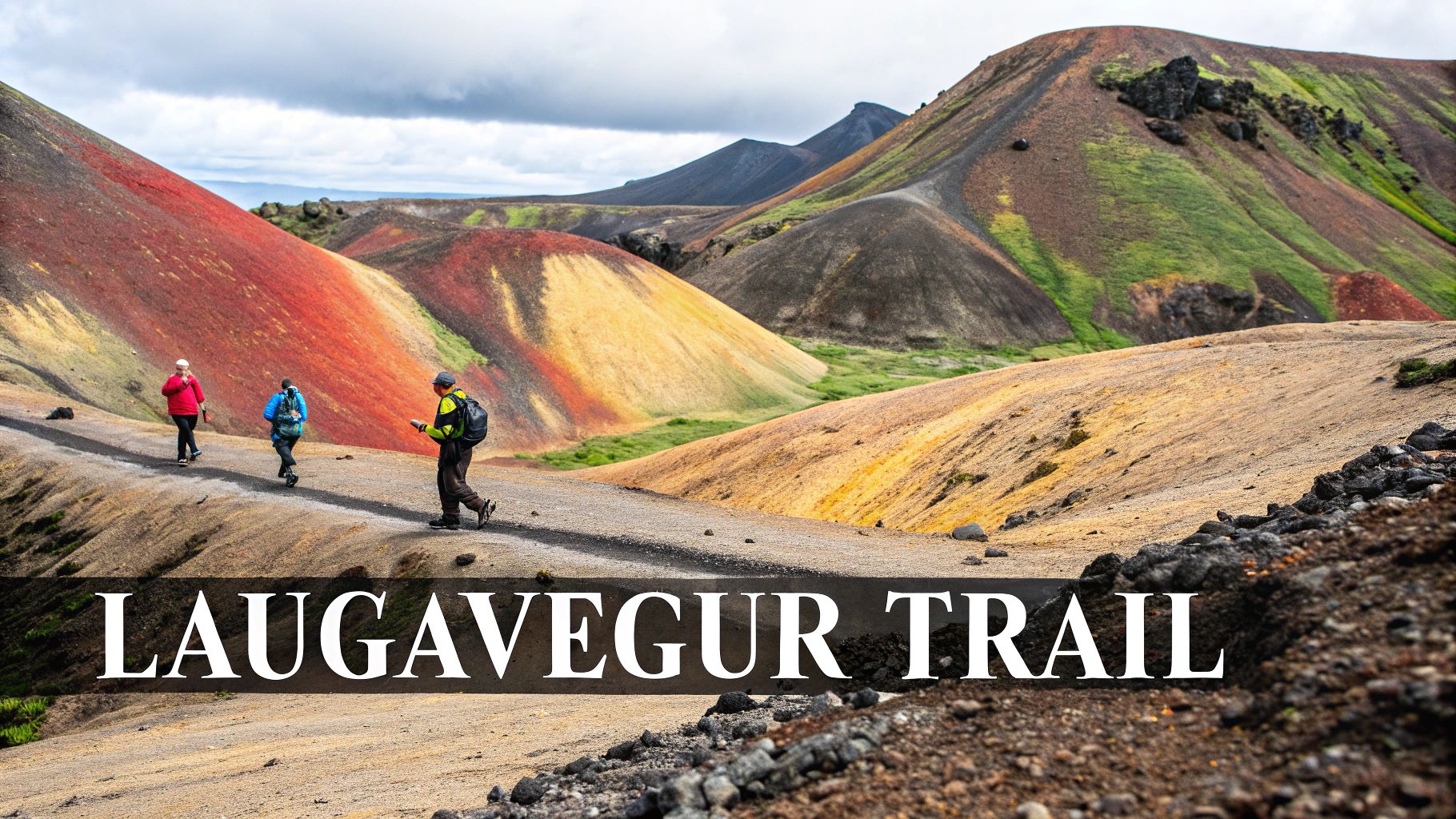
The typical north-to-south route starts amidst the vibrant Rainbow Mountains of Landmannalaugar, where hikers can soak in natural hot springs before embarking on their journey. The trail then winds through a variety of breathtaking landscapes, passing glaciers, crossing rivers, and traversing lava fields. The Laugavegur generally takes 4 days to complete, making it a manageable length for experienced hikers. For those seeking an even greater challenge, the route can be extended by another 25 kilometers (15.5 miles) with the Fimmvörðuháls trail, leading down to the dramatic Skógar waterfalls on the south coast. This extended trek adds another dimension to the adventure, taking hikers past the site of the 2010 Eyjafjallajökull eruption.
Features and Benefits:
- Diverse Volcanic Landscapes: Experience a unique geological showcase with rhyolite mountains, lava fields, glaciers, and hot springs.
- Manageable Length: The 55 km core route can be completed in 3-5 days, suitable for multi-day trekking enthusiasts.
- Hut System: Basic but comfortable mountain huts are available for booking at regular intervals, simplifying logistics.
- Well-Marked Route: Navigation is generally straightforward in good weather conditions, enhancing safety for solo travelers, especially female adventurers.
- Hot Spring Access: Begin your trek by relaxing in Landmannalaugar’s natural hot springs, a perfect start for any adventure.
Pros and Cons:
Pros:
- Otherworldly scenery and unique geological formations.
- Manageable length suitable for a multi-day trek.
- Opportunity to bathe in natural hot springs.
- Well-maintained mountain hut system.
- Clearly marked trail.
Cons:
- Very short hiking season (late June to early September).
- Unpredictable weather conditions, even snow in summer.
- Challenging river crossings after heavy rain.
- Mountain huts require advance booking, often months ahead.
- Remote location with limited emergency evacuation options.
- Increasingly crowded during peak season.
Tips for Hiking the Laugavegur Trail:

- Book Huts Early: Accommodation is limited, so book mountain huts well in advance, especially if traveling during peak season.
- Be Weather Prepared: Icelandic weather is notoriously unpredictable. Pack layers for all conditions, including rain gear, warm clothing, and even potentially snow gear, regardless of the season.
- River Crossing Footwear: Pack lightweight water shoes or sandals for river crossings, which can be frequent and sometimes challenging.
- Daily Weather Checks: Conditions can change rapidly. Check the forecast daily and be prepared to adjust your plans accordingly.
- Extra Time in Landmannalaugar: Consider adding an extra day at the start of your trek to fully explore the geothermal area and enjoy the hot springs.
- Pack Swimwear: Don’t forget your swimwear for the hot springs at Landmannalaugar!
The Laugavegur Trail’s popularity has surged in recent years, partly due to features in publications like National Geographic and the increased tourism to Iceland following the 2010 Eyjafjallajökull eruption. Its photogenic landscapes have also made it a social media star, further attracting hikers from around the world. While this has led to increased crowds, the unique experience of traversing this otherworldly volcanic landscape remains a powerful draw for adventure seekers and anyone looking for truly unforgettable hiking amongst the best trails Europe has to offer.
10. Slovenian Mountain Trail
Among the best hiking trails Europe has to offer, the Slovenian Mountain Trail (Slovenska Planinska Pot), stands out as a unique and rewarding experience. This trail isn’t just a hike; it’s a journey through the heart of Slovenia, showcasing the country’s diverse landscapes, rich culture, and warm hospitality. As the oldest connecting trail in Europe, established in 1953 by the Alpine Association of Slovenia, it traverses the entire country, from Maribor in the northeast to Ankaran on the Adriatic coast, a distance of 599 kilometers (372 miles). This makes it an ideal choice for independent solo travelers, adventure seekers, and culture enthusiasts seeking an immersive experience.
 The Slovenian Mountain Trail offers an extraordinary diversity of landscapes within a relatively compact country. The route crosses Slovenia’s major mountain ranges, including the Julian Alps, the Karavanke, and the Kamnik-Savinja Alps, offering hikers everything from dramatic alpine peaks and verdant valleys to vineyard-covered karst plateaus and the Mediterranean coastline.
Along the way, the trail connects 49 mountain huts, providing hikers with comfortable accommodation and delicious local cuisine – a feature particularly appealing to female travelers prioritizing safety and community tips, as well as budget-conscious explorers. This excellent hut system also makes the trail accessible to those who prefer not to carry camping gear.
The full traverse typically takes 30-35 days, a significant time commitment, but the trail can easily be hiked in sections, allowing for shorter trips tailored to individual schedules. This flexibility caters to a wide range of hikers, from those seeking multi-week adventures to those looking for shorter weekend escapes. For instance, the alpine section through Triglav National Park and the Julian Alps offers a challenging yet rewarding experience with breathtaking views. The traditional ascent of Mt. Triglav (2,864m), Slovenia’s highest peak and a national symbol, is considered a pilgrimage for Slovenians and a highlight for many hikers. The karst section, on the other hand, offers a gentler experience as it approaches the Adriatic coast.
Pros:
- Extraordinary diversity of landscapes in a compact country.
- Excellent mountain hut system with good food and accommodation.
- Less crowded than many other European mountain ranges.
- Cultural experience with Slovenia’s unique Alpine-Slavic heritage.
- Good value compared to hiking in the Western Alps.
- Can easily be hiked in sections.
Cons:
- Some exposed sections requiring scrambling skills, particularly in the Julian Alps.
- The traditional ascent of Triglav involves via ferrata routes requiring proper equipment and potentially a guide.
- Weather can change rapidly in the mountain sections.
- Full traverse requires significant time commitment.
- Some sections have limited public transport access.
Tips for Hiking the Slovenian Mountain Trail:
- July to mid-September offers the best conditions for the alpine sections.
- Book mountain huts in advance, especially during July and August.
- Consider hiring a guide for the Triglav section if you lack alpine experience.
- Bring a helmet for the more technical sections with fixed protection (via ferrata).
- Learn basic Slovenian phrases to enhance your experience in the huts.
- Dom Planika and Triglavski Dom are the classic mountain huts for the Triglav ascent.
Slovenia’s growing reputation as Europe’s ‘green destination’, coupled with features in popular hiking guides like Lonely Planet, has further popularized the Slovenian Mountain Trail. For those seeking an unforgettable hiking experience in one of Europe’s hidden gems, this trail offers a unique blend of natural beauty, cultural immersion, and challenging adventure, firmly securing its place among the best hiking trails Europe offers.
Top 10 European Hiking Trails Comparison
| Trail | 🔄 Implementation Complexity | ⚡ Resource Requirements | 📊 Expected Outcomes | 💡 Ideal Use Cases | ⭐ Key Advantages |
|---|---|---|---|---|---|
| Tour du Mont Blanc | Moderate (7-11 days, 170 km, moderate fit) | Moderate (mountain huts, hotels, advance booking) | Spectacular Alpine scenery & cultural variety | Multi-day Alpine trek for moderately experienced hikers | Well-marked, excellent infrastructure, flexible sections |
| Camino de Santiago (French Way) | Moderate (30-35 days, 780 km) | Low to moderate (affordable hostels, pilgrim passport) | Cultural immersion with spiritual significance | Long pilgrimage or cultural walk, social groups | Iconic waymarking, social atmosphere, budget-friendly |
| Haute Route | High (12-14 days, 180 km, technical skills) | High (mountain huts, mountaineering gear) | Dramatic high-alpine scenery and challenge | Experienced mountaineers seeking wilderness alpine trek | Spectacular scenery, less crowded than TMB, excellent huts |
| GR20 (Corsica) | Very High (15-16 days, 180 km, technical terrain) | High (basic refuges, safety gear, advance booking) | Rugged wilderness adventure and achievement | Experienced hikers seeking Europe’s toughest trek | Rugged beauty, unique Corsican culture, low crowd levels |
| Kungsleden (The King’s Trail) | Moderate (variable section hiking, 440 km) | Moderate (mountain huts, boardwalks, cash for hut fees) | Arctic wilderness experience, wildlife spotting | Wilderness hiking with moderate fitness, seasonal trips | Well-maintained trail, accessible huts, unique Arctic nature |
| West Highland Way | Moderate (6-8 days, 154 km) | Moderate (frequent accommodation, public transport) | Scenic Scottish Highlands introduction | Beginner-friendly long-distance hike with good support | Good infrastructure, diverse landscapes, year-round option |
| Dolomites High Route 1 | Moderate to High (8-10 days, 120 km) | Moderate (rifugios, advance booking) | Stunning limestone alpine views & cultural mix | Alpine hiking accessible to fit hikers, cultural interest | Comfortable huts, unique scenery, multiple exit points |
| GR10 (Pyrenees) | High (45-60 days, 866 km, challenging terrain) | High (gîtes, refuges, long time commitment) | Diverse landscapes and cultural experience | Long, multi-week trek for experienced hikers | Superb biodiversity, less crowded, rich cultures |
| Laugavegur Trail | Moderate (3-5 days, 55 km, moderate weather risk) | Moderate (hut bookings, weather gear) | Unique volcanic landscapes and geothermal features | Short wilderness trek with dramatic geology | Otherworldly scenery, manageably short, hot springs |
| Slovenian Mountain Trail | Moderate to High (30-35 days, 599 km) | Moderate (mountain huts, some technical gear) | Diverse mountain landscapes & cultural heritage | Long-distance Alpine hiking with cultural immersion | Excellent hut system, less crowded, Alpine-Slavic culture |
Start Your European Hiking Adventure Today!
From the breathtaking heights of the Tour du Mont Blanc to the captivating culture along the Camino de Santiago and the rugged beauty of the GR20, the best hiking trails in Europe offer an unparalleled opportunity for self-discovery, adventure, and connection with nature. Whether you’re seeking a challenging trek like the Haute Route or a more leisurely stroll along the West Highland Way, there’s a perfect path waiting for you. We’ve explored some of the most iconic routes, each with its unique charm and appeal, catering to various experience levels and interests. Remember, choosing the right trail is a crucial first step in planning your solo adventure, factoring in difficulty, scenery, and accessibility.

The trails highlighted in this article, including gems like Kungsleden, the Dolomites High Route 1, the GR10, Laugavegur Trail, and the Slovenian Mountain Trail, provide diverse landscapes and cultural experiences. They cater to the independent traveler seeking freedom and self-exploration, with opportunities to meet fellow hikers and share stories.
For female travelers prioritizing safety and community tips, researching trail conditions and connecting with online hiking groups beforehand can be invaluable. Budget-conscious explorers can find numerous resources for cost-effective travel and accommodation options along these well-trodden paths. And for those seeking immersion in local culture and history, each trail offers unique insights into the heart of Europe.
Preparing for a hike also involves packing efficiently. Check out these expert packing tips to maximize space and ensure you have everything you need for your adventure. These tips, sourced from “How to Pack a Box for Moving: Expert Packing Tips from Endless Storage”, can be adapted for your hiking backpack.
Embarking on one of these best hiking trails in Europe is more than just a walk in the mountains; it’s an investment in yourself. It’s a chance to connect with nature, challenge your limits, and discover hidden corners of the continent, all while experiencing the liberating joy of solo travel. So, pack your bags, lace up your boots, and prepare to be transformed by the magic of the European trails. Where will your feet take you next?
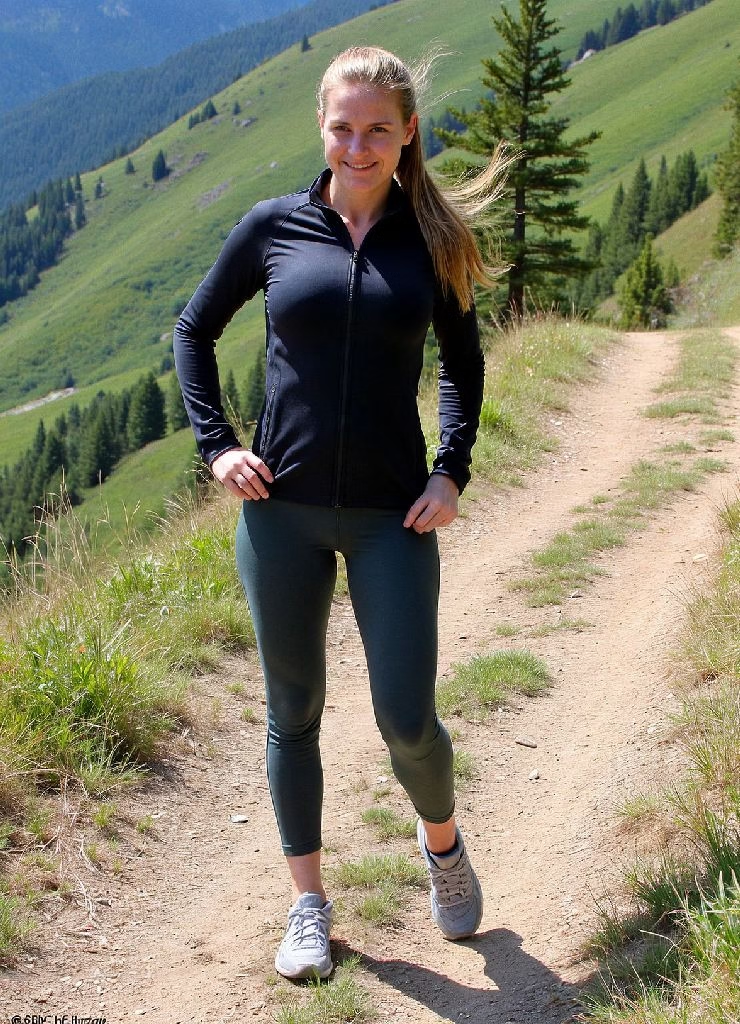
Hi, I’m Lily, a travel writer based in the UK who loves exploring everything from familiar hometown gems to the varied landscapes across Europe. Whether I’m strolling through charming coastal villages or hopping trains across the continent, I’m always on the lookout for authentic, unexpected stories and experiences.
My writing style is simple and relatable—think no-fuss guides to finding the best pasty in Cornwall or stress-free tips for getting around European cities. If there’s a great view, tasty food, or a bit of history involved, chances are I’m already scribbling notes about it.