


Is Barcelona safe for solo travellers? The honest truth
Is Barcelona safe for solo travellers? The honest truth explores safety tips, common concerns, and p…
Nestled in southwestern Europe on the Iberian Peninsula, Spain is a country of extraordinary contrasts, offering everything from pristine beaches to snow-capped mountains, from bustling cities to sleepy villages, and from ancient landmarks to cutting-edge modernity.
Spain is one of the most naturally solo-travel-friendly countries in Europe. The tapas bar culture, moving between venues, ordering individually, standing at a zinc counter or sitting on a stool, is a social format designed around the individual that makes eating alone not just acceptable but genuinely pleasurable. The late schedule (dinner at 9pm, bars filling after midnight) means that solo presence in evening social contexts is normal rather than conspicuous. And the Spanish cities are sufficiently distinct from each other, Barcelona and Madrid are different countries in cultural feel, that Spain rewards multiple visits rather than a single pass.
The one caveat that applies across the country: petty theft is more prevalent in Spain than in most Western European countries, concentrated in Barcelona but present in Madrid, Seville and the major tourist areas. This is a manageable, specific risk rather than a generalised safety concern, but it needs to be taken seriously with specific habits (bags in front, phones in pockets) in a way that, say, Vienna or Lisbon doesn’t require.
Barcelona
One of the best ways to experience Barcelona is by immersing yourself in its vibrant culture. From exploring the winding streets of the Gothic Quarter to soaking up the sun at Barceloneta Beach, this city offers something for everyone.Indulge in delicious Catalan cuisine at local tapas bars or sip on a refreshing glass of sangria while taking in br…
Ibiza
Ibiza is a paradise in the Mediterranean, a place where you can relax and take in the laid-back hippy attitude of its fashion and street markets, where you can spend some time lounging on a Bali bed next to the water, or where you can watch the sunset while surrounded by breathtaking surroundings. Due to the fact that Ibiza is so genuine, it is abl…
Madrid
Madrid is renowned for being an open city that welcomes people from all over the world. Every moment of the day, the city is filled with people who are happy and full of vitality. Madrid will surprise you with its quiet historic sites that attract everyone going by. In addition to its well-known museums, its busy avenues that are studded with all t…
Seville
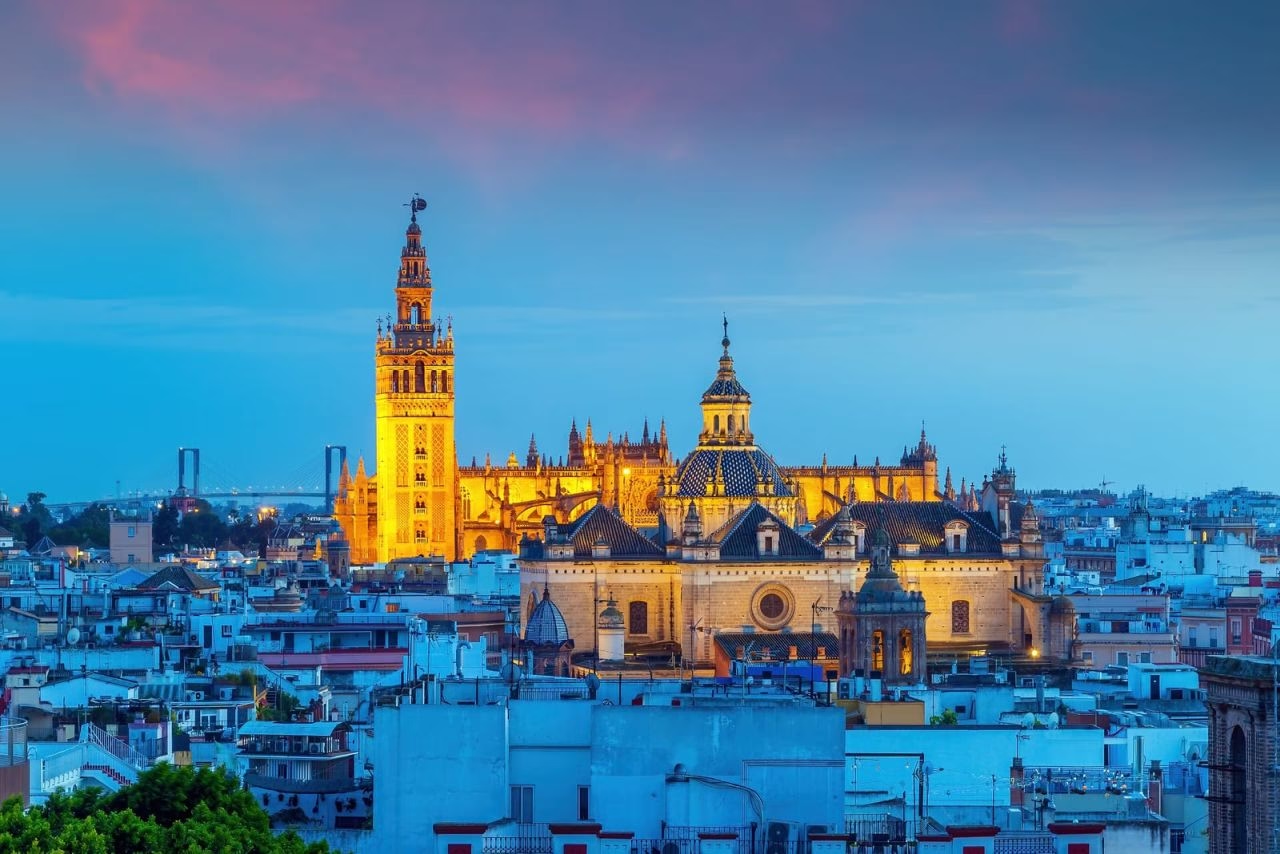
Seville, a Roman city that is now home to three UNESCO World Heritage Sites, is brimming with historical charm. The Alcazar castle complex is a beautiful mosaic of architectural styles, and the Cathedral is famous for its beauty as well as its importance as Christopher Columbus’ burial site.
Valencia
Valencia, nestled on the eastern coast of Spain, is a city brimming with history and culture. The architectural marvels that adorn the cityscape stand as testaments to its rich past, from the towering Valencia Cathedral to the futuristic City of Arts and Sciences complex. Strolling through the cobbled streets of El Carmen or wandering along the bus…
The two major cities serve different solo travel personalities. Barcelona is visual and immediate, the Gaudí architecture, the Gothic Quarter, the sea, and its pleasures are accessible from the first afternoon. The social energy is high and the solo traveller has no shortage of things to look at and eat. The theft risk is the real cost.
Madrid is more interior and more rewarding over time. Its art museums (the Prado, the Reina Sofía, the Thyssen-Bornemisza, three world-class institutions within walking distance of each other), its neighbourhood life in Malasaña and Lavapiés, its late schedule and tapas culture, these reveal themselves across days rather than hours. And the safety situation is meaningfully better than Barcelona.

Seville for the Alcázar, flamenco culture and the most atmospheric old city in Andalusia. San Sebastián for arguably the finest food city in Europe per capita. Granada for the Alhambra (book months in advance) and the tapas-with-drinks culture that is unique to Andalusia. Valencia for the city of arts and sciences, the origin of paella, and a more relaxed version of the coastal Spain experience. Spain rewards regional exploration significantly.
Spain’s AVE high-speed train network connects Madrid to Barcelona (2h30), Seville (2h30), Valencia (1h35) and Málaga (2h20). Book in advance via Renfe for the best fares. Budget airlines cover routes the trains don’t reach. The Spanish bus network (Alsa) is cheap, comfortable and covers smaller cities and towns the train skips.
Written by Jennifer Ann Porter, solo travel writer at gotravelyourself.com. Jenny has travelled solo across Spain multiple times.