
Last Updated on
Quick answer: Tokyo is one of the easiest big cities in the world to visit alone. Violent crime is low, trains are reliable and signed in English, and eating solo is completely normal. The main challenges are size, rush-hour crowds and a few cultural rules. Base yourself near a major station, get a Suica or Pasmo card, and plan fewer sights per day than you think you need.
Why Tokyo works for solo travelers
Tokyo is built for people who move through it independently. Counter seating, one-person ramen booths, capsule hotels and ticket-machine restaurants all assume that the customer is alone. Nobody will look twice at a table for one.
Safety is a real strength. Tokyo is widely regarded as one of the safest major capitals, and walking at night in most areas is routine. Normal precautions still apply, especially in nightlife districts such as parts of Kabukicho in Shinjuku and Roppongi, where drink-spiking and overcharging scams targeting visitors are well documented. Decline street touts who invite you into bars, and never leave a drink unattended.
Japan’s government and tourism sources list current safety notices, so check your own government’s travel advice before you go. For wider planning, see our solo travel safety guide.
Where to stay
Choose a neighborhood on a major rail line, ideally on the Yamanote Line or a direct subway line, so you can get to most sights with one transfer or none.
| Area | Best for | Keep in mind |
|---|---|---|
| Shinjuku | First visit, transport hub, huge choice of food | Station is enormous; the Kabukicho area is lively late at night |
| Shibuya | Nightlife, shopping, young crowd | Busy and noisy; rooms cost more |
| Asakusa | Traditional atmosphere, lower prices, hostels | Quieter evenings; farther from western Tokyo |
| Ueno | Museums, parks, airport access via Keisei Skyliner | Less polished at night than other areas |
| Tokyo Station / Ginza | Shinkansen access, upscale dining | Business-district feel, fewer casual bars |
If you want company, a social hostel in Asakusa, Ueno or Shinjuku is the easiest way to meet other travelers. If you want privacy and quiet, a business hotel near a station is clean, compact and good value.
Getting around
Tokyo’s rail network is run by several operators, mainly JR East and Tokyo Metro/Toei. Google Maps handles routes, platform numbers and transfers well, and most major stations have English signs.
- IC card: Suica and Pasmo work on nearly all trains, subways, buses and many shops and vending machines. Mobile versions are available on recent smartphones, so check current options for your phone before you arrive. Physical card availability has varied in recent years, so confirm at the airport or a station.
- Rush hour: Trains are crowded roughly 7:30 to 9:30 am and again in the evening. Avoid them with a bulky bag.
- Last trains: Most lines stop around midnight. Check the last train before heading out, since taxis late at night are expensive.
- Women-only cars: Some lines run women-only cars at rush hours, marked on platforms.
- Etiquette: Keep your phone on silent, avoid phone calls and talk quietly.
Eating alone
Solo dining is one of Tokyo’s real pleasures.
- Ticket-machine restaurants: Choose and pay at a machine by the door, hand over the ticket, and eat. No conversation required, and many machines have English or pictures.
- Ramen counters and booths: Chains with individual booths are made for one.
- Conveyor-belt sushi: Take what you like at your own pace.
- Izakaya: Many have counter seats, a good option for an evening drink. Some charge a small seating fee, called otoshi.
- Department-store food halls and convenience stores: Good quality, cheap, and ideal for a quick meal.
Tipping is not expected in Japan.
What to do alone
Easy first-day picks
- Meiji Shrine and Yoyogi Park: A calm wooded walk in the middle of the city.
- Senso-ji and Asakusa: Go early, before tour groups arrive.
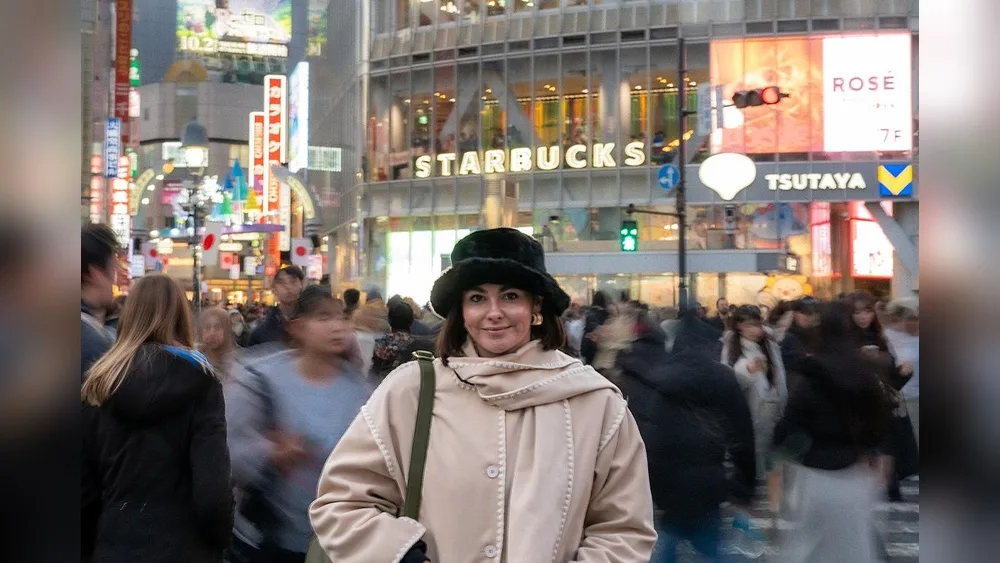
- Shibuya Crossing: Watch from a nearby elevated viewpoint, then move on.
- Ueno Park and its museums: Good for a slow, easy day.
- Tsukiji Outer Market: Street food and snacks; go in the morning.
Quieter neighborhoods
- Yanaka: Older streets, small shops and temples that survived the 20th-century destruction of much of the city.
- Shimokitazawa: Vintage shops, small cafes and live music.
- Kagurazaka: Narrow lanes, traditional restaurants and a slightly French feel.
Check ahead
Popular attractions such as teamLab venues, the Ghibli Museum, observation decks and sumo tournaments often require advance tickets, and the rules change. Check official sites and book early where needed. A guided small-group tour is a good way to see a district with company.
Meeting people
- Stay in a social hostel or guesthouse with a common room.
- Join a food or walking tour. These often attract other solo travelers.
- Try a cooking class, a calligraphy class or a tea-ceremony session.
- Use language-exchange events and Meetup groups for time in the city beyond a few days.
Locals are polite but often reserved. A short greeting, a smile and a simple “sumimasen” (excuse me) go a long way. See our guide on how to meet people when you travel solo for more ideas.
Language and connectivity
You can manage with English at stations, major attractions and hotels, but less so in small restaurants and local shops. Download Google Translate with offline Japanese and use the camera feature for menus and signs. For data, an eSIM or a rented pocket Wi-Fi works well; see how to stay connected while travelling abroad.
Money
Cards are accepted far more widely than a few years ago, but cash is still needed in many small restaurants, temples, shrines and vending machines. Convenience-store ATMs (7-Eleven, Lawson, FamilyMart) generally accept foreign cards. Pay by placing money in the small tray at the register rather than handing it over directly.
| Style | Typical daily spend (excluding flights) |
|---|---|
| Budget (hostel, cheap meals) | Roughly 7,000 to 12,000 yen |
| Mid-range (business hotel, mix of restaurants) | Roughly 15,000 to 25,000 yen |
| Comfortable (nicer hotel, tours, dining) | 25,000 yen and up |
These are rough planning ranges that move with exchange rates and season, so check current prices before you book.
When to go
- Spring (March to May): Cherry blossoms in late March to early April. Beautiful and crowded, with higher hotel prices.
- Summer (June to August): Hot, humid, with a rainy spell in early summer. Festivals and fireworks are the highlight.
- Autumn (September to November): Pleasant weather and fall color, usually from late November. A strong choice for most solo travelers.
- Winter (December to February): Cold, dry and clear, with illuminations and fewer crowds.
Earthquakes and emergencies
Japan is earthquake-prone and well prepared. If you feel a quake, drop, cover and hold on, then follow staff instructions. Note the emergency exits in your hotel, and consider a disaster-alert app. In an emergency, dial 110 for police and 119 for ambulance and fire. The Japan National Tourism Organization runs a visitor hotline, and the number and hours are listed on its official site, so save it before you travel. A small police box (koban) is never far away if you need directions or have lost something. Lost items are frequently returned.
Common mistakes
- Trying to fit too much into a day. Tokyo is huge, and transfers take time.
- Arriving with no cash.
- Staying far from a station to save a little money.
- Carrying a large suitcase on crowded trains. Use a luggage-forwarding service (takkyubin) or station lockers.
- Following touts into nightlife venues.
Solo travel in Tokyo FAQ
Is Tokyo safe for solo travelers?
Yes, it is generally very safe, including for solo women. The main risks are nightlife scams and drink spiking in certain districts, plus pickpocketing in crowds, which is uncommon but possible.
Can I get by with only English?
In most tourist areas, yes. Expect less English in small restaurants and local neighborhoods, so use a translation app.
How many days do I need?
Four to five days covers the main sights without rushing. A week lets you add day trips such as Kamakura, Nikko or Hakone.
Is it awkward to eat alone?
No. Many restaurants are designed for one person, and nobody will think it unusual.
What is the best way to pay for transport?
A Suica or Pasmo IC card, physical or mobile. Tap in and out at gates and top up as needed.
Keep planning

Hi, I’m Lily, a solo traveller, slow travel advocate and writer based in Wales. I’ve been exploring Europe independently for 9 years, mostly by train, mostly without a rigid itinerary, and almost always alone.
I’ve taken 55+ solo trips through France, Italy, Spain, Portugal, Germany, the Netherlands, the Balkans, the Baltics and Scandinavia. I speak French and Italian, both learned on the road rather than in a classroom, which means I’m better at ordering wine and arguing with train conductors than I am at formal grammar.
My particular passion is the parts of Europe that don’t make the Instagram highlight reels: the underrated cities, the regional trains that no one takes, the local markets, the restaurants where you’re the only foreigner and the menu isn’t in English. I’ve eaten alone in some of the world’s best restaurants and some of its scruffiest tavernas, and I firmly believe solo dining is one of the great underrated pleasures of travel.
I write practical guides for solo travellers who want to actually experience a place, not just tick it off a list.